

You’ve probably heard the terms “high porosity hair” or “low porosity hair” while scrolling through beauty blogs or watching YouTube tutorials.
But what does it actually mean? And more importantly, why should you care?
Hair porosity is one of the most misunderstood hair characteristics, yet understanding it can completely transform how you treat and care for your hair. It’s the difference between spending money on products that actually work versus wasting money on treatments that leave your hair dull, frizzy, or dry.
In this guide, we’ll explain what hair porosity is, how to identify yours, and which treatments work best for each type.
WHAT IS HAIR POROSITY?
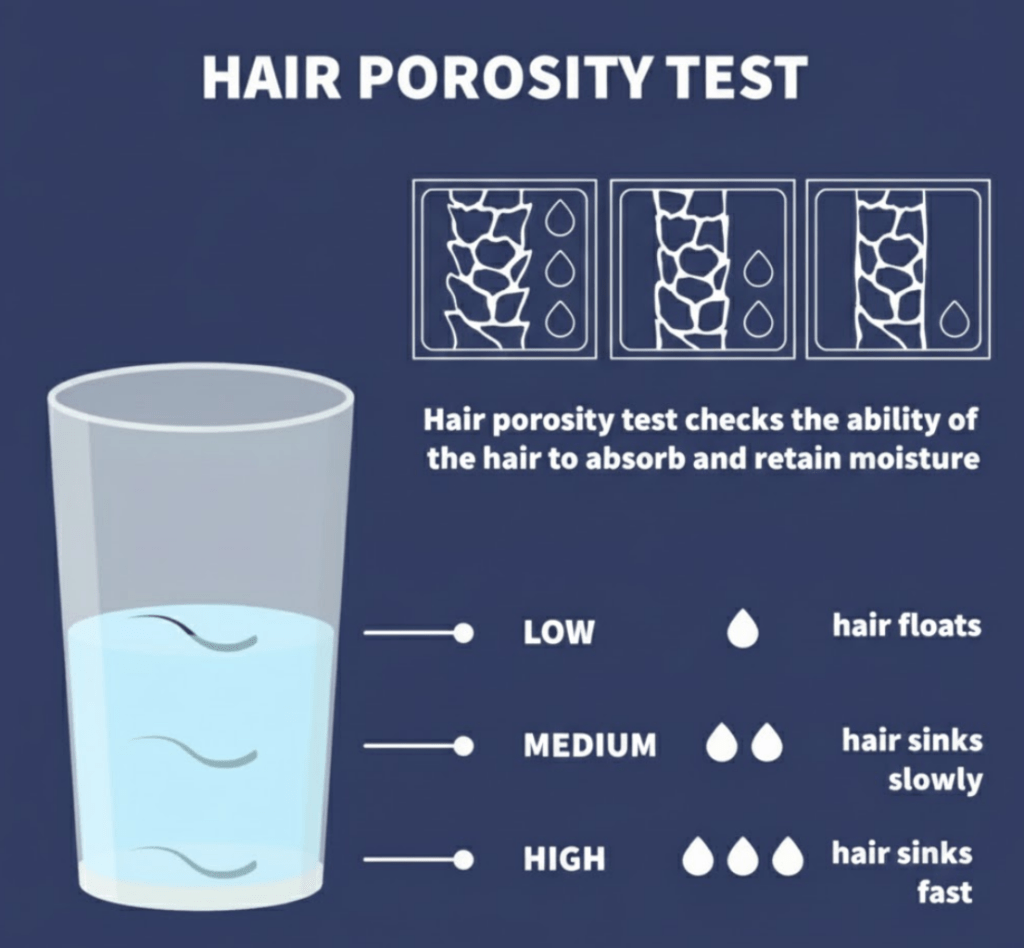
Hair porosity is simply your hair’s ability to absorb and retain moisture.
Think of it like a sponge. A highly porous sponge absorbs water quickly but also releases it quickly. A low porosity sponge absorbs water slowly but holds onto it longer.
Your hair works the same way.
The science:
Hair is made up of three layers:
- Cuticle (outer protective layer) – overlapping cells like roof shingles
- Cortex (middle layer) – contains proteins and pigment
- Medulla (inner core) – the smallest layer
Hair porosity is determined by how tightly or loosely these cuticle cells lay. When cuticles lay flat and tight, your hair has low porosity. When cuticles are raised and open, your hair has high porosity.
Your porosity is largely determined by your genetics, but environmental damage (heat, chemicals, sun) can permanently increase porosity over time.
THE THREE TYPES OF HAIR POROSITY
LOW POROSITY HAIR
How to identify:
- Water beads up on hair instead of absorbing
- Takes a long time to dry even with blow dryer
- Products sit on top rather than absorbing
- Hair looks shiny but feels dry
- Minimal frizz, rarely tangles
Main issue: Cuticles won’t let moisture in, so heavy products make it worse.
MEDIUM POROSITY HAIR
How to identify:
- Water absorbs moderately into the hair
- Hair dries in reasonable time
- Products absorb well without buildup
- Bouncy, voluminous appearance
- Minimal frizz, holds styles well
Advantage: Easiest hair type to manage. Works with most products and responds well to treatments.
HIGH POROSITY HAIR
How to identify:
- Water absorbs very quickly into the hair
- Hair dries very fast (even in humid conditions)
- Always feels dry despite moisture
- Prone to frizz, especially in humidity
- Hair tangles and breaks easily
- Dull appearance despite moisture
Main issue: Moisture enters quickly but exits just as fast, leaving hair perpetually dry.
TREATMENTS, PRODUCTS & CARE BY HAIR POROSITY
FOR LOW POROSITY HAIR
Goal: Open cuticles so moisture can penetrate
How it works: Your cuticles are tightly sealed, which means regular products sit on top instead of absorbing. You need heat to temporarily open those cuticles and let moisture in.
Best treatments:
- Apply products WITH heat (steam, warm deep conditioning masks, blow dry while conditioning) to open cuticles temporarily
- Use lightweight, water-based products that can penetrate flat cuticles (hydrating serums, glycerin-based products, water-based leave-in conditioners)
- Clarify monthly with chelating shampoo to remove product buildup (buildup prevents moisture from reaching hair)
- Skip heavy oils and protein masks – they sit on top and don’t help
Recommended products:
- Lightweight hydrating serums
- Water-based leave-in conditioners
- Clarifying shampoos
- Glycerin-based products
What NOT to do:
- ❌ Don’t use heavy oils or butters (they sit on top, won’t absorb)
- ❌ Don’t skip heat when applying treatments (you need it to open cuticles)
- ❌ Don’t do frequent protein treatments (causes buildup and blocks absorption)
- ❌ Don’t skip clarifying (buildup is your #1 enemy)
FOR MEDIUM POROSITY HAIR
Goal: Maintain balanced moisture and protein
How it works: You’re the lucky ones! Your cuticles are naturally balanced, so you can work with most products. Your hair is resilient and responds well to regular maintenance.
Best treatments:
- Use regular shampoo and conditioner every wash – you don’t need special products
- Deep condition monthly with hydrating masks to maintain moisture levels
- Use medium-weight leave-in conditioner regularly for extra hydration between washes
- Do occasional protein treatments (1x monthly) to maintain strength without buildup
- Apply heat protectant spray before styling to prevent damage
Recommended products:
- Balanced moisturizing shampoo and conditioner
- Medium-weight leave-in conditioner
- Standard hair oils (argan, jojoba)
- Regular deep conditioning masks
What NOT to do:
- ❌ Don’t over-treat your hair (you have the easiest type, keep it simple)
- ❌ Don’t do excessive heat styling without protection (damages hair permanently)
- ❌ Don’t skip regular trims (split ends increase damage)
FOR HIGH POROSITY HAIR
Goal: Seal moisture in and strengthen damaged hair
How it works: Your cuticles are open and raised, so moisture escapes as quickly as it enters. You need heavy products to seal moisture inside, plus frequent protein to fill in damaged areas.
Best treatments:
- Use heavy oils and rich creams to seal moisture inside (coconut oil, argan oil, jojoba oil, hair butters) – these coat the hair shaft to trap water
- Deep condition frequently (2x per week) with protein-rich masks to fill gaps in damaged cuticles and strengthen hair
- Use sealing rinses after conditioning (apple cider vinegar or rice water rinse) to close cuticles and lock moisture in
- Do frequent protein treatments (1-2x monthly) because your hair is damaged and needs the strengthening
- Minimize heat styling and always use heat protectant spray when you do style
Recommended products:
- Heavy oils (coconut, argan, jojoba)
- Rich, creamy deep conditioning masks
- Heavy leave-in conditioners
- Protein-enriched treatments (keratin masks, egg treatments)
- Sealing rinses (apple cider vinegar or rice water)
What NOT to do:
- ❌ Don’t use only light products (won’t seal moisture inside)
- ❌ Don’t skip protein treatments (damaged hair needs strengthening)
- ❌ Don’t heat style without protection (worsens damage)
- ❌ Don’t skip deep conditioning (leaves hair dry and weak)
SINGAPORE HUMIDITY & HAIR POROSITY
Singapore’s tropical humidity affects each porosity type very differently:
Low porosity in Singapore: Your hair actually improves in humid conditions because the moisture in the air helps penetrate your sealed cuticles. This is an advantage! You’ll experience less frizz than people in dry climates. However, your hair may feel more weighted down in extreme humidity, so use lighter leave-in conditioners during monsoon season.
Medium porosity in Singapore: Your balanced hair responds beautifully to Singapore’s humidity. You typically don’t have frizz issues and maintain good moisture balance naturally. Your main challenge is preventing the high heat from damaging your hair over time. Use heat protectant spray during hot, humid months and try to limit blow-drying to 1-2x per week.
High porosity in Singapore: You face the biggest challenge with humidity. Singapore’s moisture-rich air is your enemy because your hair absorbs all that humidity but cannot retain it internally. This causes severe frizz, flyaways, and a constantly puffy appearance. Your hair needs extra protection: use gel-based sealing products, wear protective styles (braids, buns) during monsoon season, and deep condition at least 2x weekly. Anti-frizz serums and heavy sealing oils are your best friends in Singapore’s climate.
READY TO CARE FOR YOUR HAIR?
Understanding your hair porosity is the first step to getting treatments that actually work. Once you know your porosity type, you can choose products and treatments designed specifically for your hair’s needs.
This guide is brought to you by Glamingo—Singapore’s AI-powered beauty and wellness marketplace. Soon, you’ll be able to discover, compare, and book hair coloring services at featured salons directly through Glamingo. Stay tuned.
DISCLAIMER: Hair porosity information compiled from dermatological and trichological sources. Individual hair characteristics vary. For persistent hair concerns, consult with a professional hair stylist or dermatologist for personalized recommendations.
 Glamingo Blog
Drop in your comments..