
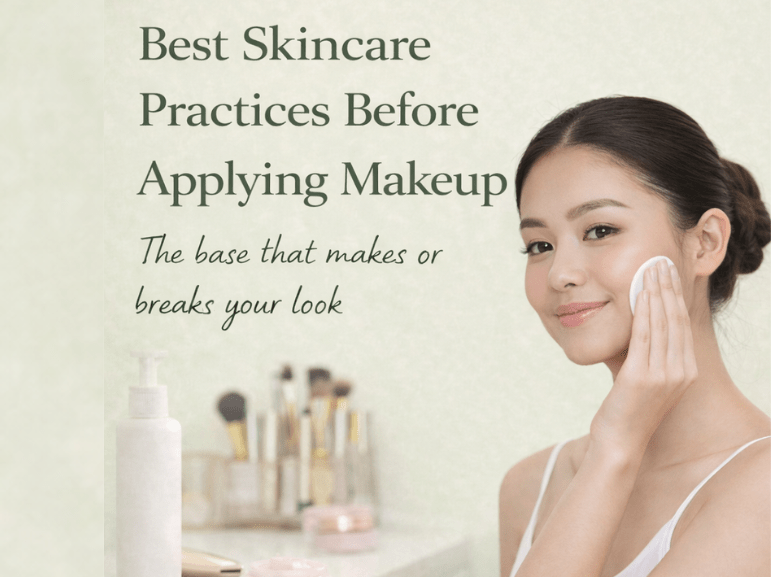
You’ve picked the perfect foundation.
Your concealer shade is spot on.
Your makeup brushes are clean and ready.
And yet—your makeup looks patchy, cakey, or doesn’t last more than a few hours.
The problem usually isn’t your makeup.
It’s what’s happening before you apply it.
This guide shows you how to prep your skin so your makeup looks smooth, natural, and long-lasting.
Why Pre-Makeup Skincare Matters
Makeup sits on your skin—it doesn’t replace skincare.
Without proper prep:
- Foundation clings to dry patches
- Concealer creases or slips
- Makeup oxidises or melts faster
- Skin looks textured instead of smooth
Good skincare before makeup creates:
- A smooth, hydrated base
- Better makeup blending
- Longer wear without touch-ups
Step 1: Start With Clean Skin (Always)
Makeup should never go on dirty or product-heavy skin.
Before applying makeup:
- Cleanse your face with a gentle cleanser
- Remove oil, sweat, and overnight residue
- Avoid harsh scrubs or foaming cleansers that strip the skin
Best for: Everyone
Skipping this step leads to clogged pores, uneven application, and breakouts.
Step 2: Hydration Is Non-Negotiable
Hydrated skin = better makeup.
After cleansing:
- Apply a lightweight hydrating toner or essence (optional)
- Follow with a moisturiser suited to your skin type
Choose wisely:
- Gel or water-based moisturisers for oily or acne-prone skin
- Cream-based moisturisers for dry or dehydrated skin
Let your moisturiser absorb for 2–3 minutes before moving on.
Best for: Preventing cakey foundation and creasing.
Step 3: Treat, Don’t Overload
This is where most people go wrong.
Before makeup:
- Stick to one or two calming, familiar serums
- Hydrating serums (like hyaluronic acid) work best
- Avoid strong actives like retinol, exfoliating acids, or vitamin C right before makeup
Too many products = product pilling and slipping makeup.
Best for: Smooth texture and stable base.
Step 4: Sunscreen (Yes, Even Under Makeup)
If you’re stepping out during the day, sunscreen is essential.
What to do:
- Use a lightweight, non-greasy sunscreen
- Allow it to fully set before applying makeup
- Choose formulations that don’t leave a white cast
Skip this only if your makeup base already contains adequate sun protection.
Best for: Daily protection without ruining makeup.
Step 5: Primer—Only If You Actually Need It
Primer isn’t mandatory for everyone.
Use primer if you:
- Have visible pores
- Get oily quickly
- Need makeup to last for long hours
Skip primer if:
- Your skincare already gives you a smooth base
- You prefer a natural, skin-like finish
Think of primer as a support step, not a fix-all.
What to Avoid Right Before Makeup
- Facial oils (can break down makeup)
- Heavy exfoliation
- New skincare products
- DIY masks or home remedies
- Rushing the process without letting layers settle
These often cause makeup to separate, crease, or fade quickly.
The Biggest Mistake People Make
Trying to do too much right before makeup.
Great makeup starts with calm, balanced skin, not last-minute fixes or viral hacks. The goal is to support your skin—not overwhelm it.
Final Takeaway: Prep Smart, Not More
The best skincare before makeup is:
- Simple
- Consistent
- Suited to your skin type
When your skin is properly prepped, makeup becomes easier, lighter, and more effective—no heavy layers required.
This guide is brought to you by Glamingo — Singapore’s AI-powered beauty and wellness marketplace.
Soon, you’ll be able to discover, compare, and plan skincare routines and makeup-prep treatments across trusted salons and clinics—all personalised to your skin needs.
Disclaimer: Skincare routines should be tailored to individual skin types. Always consult a professional before introducing new products or treatments.
 Glamingo Blog
Drop in your comments..