You’ve probably heard about laser hair removal from friends, salons, or Instagram reels promising smooth, hair-free skin.
It sounds convenient. It sounds long-term.
But it also raises a lot of questions.
Is it safe?
Does it hurt?
Does it work for everyone?
If you’re considering laser hair removal but feel unsure, this guide breaks it all down — what it is, how it works, who it’s best for, and what to expect, so you can decide with clarity, not confusion.
What Is Laser Hair Removal?
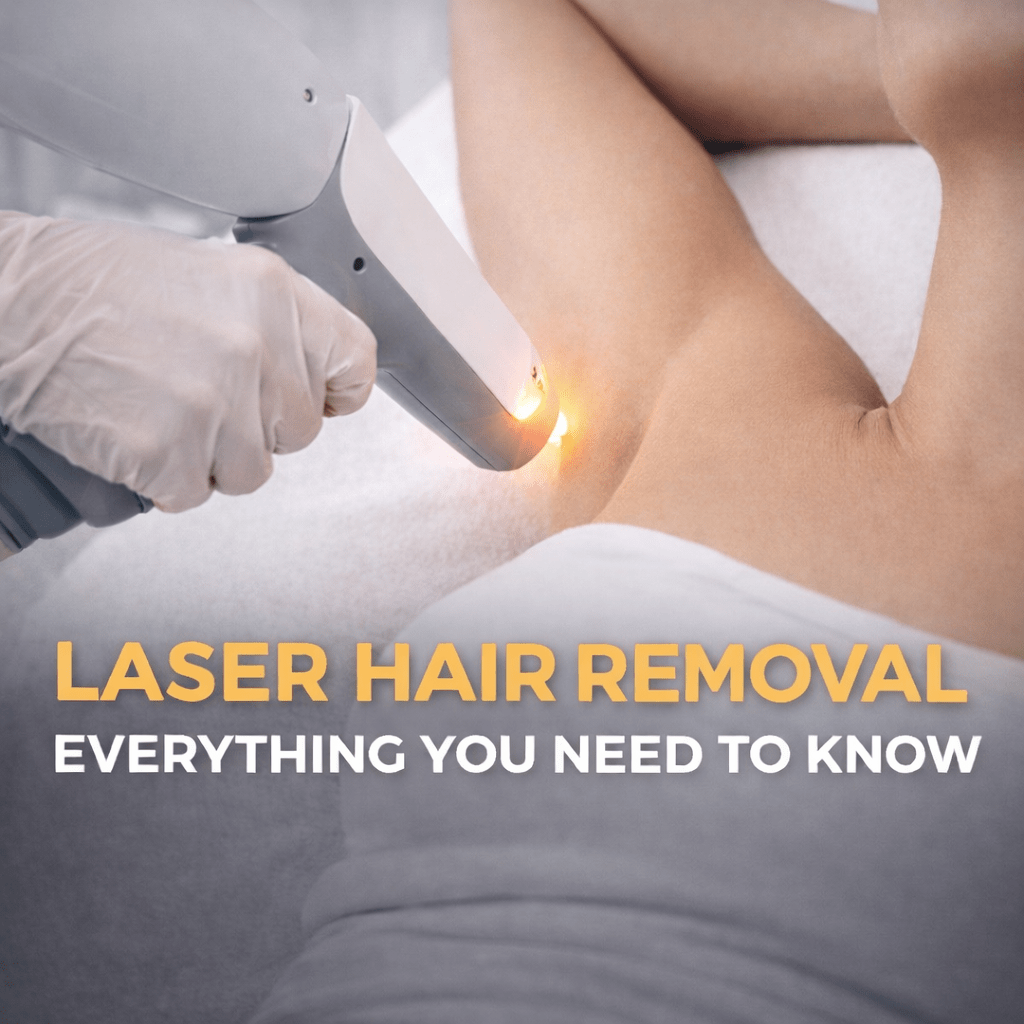
Laser hair removal is a treatment that uses focused light energy to target hair follicles — specifically, the dark pigment (melanin) inside them.
Here’s what actually happens: A laser beam penetrates your skin and hits the melanin in the hair shaft. That light converts to heat, which damages the hair follicle at the root. Think of it like a tiny, precise burn to the follicle — intense enough to disrupt growth, but controlled so it doesn’t harm the surrounding skin. Your body then naturally sheds the damaged hair over the next 1–2 weeks.
Over multiple sessions, the cumulative damage means hair becomes: Finer, Lighter and Slower to grow back
Important: It’s a reduction method — not instant, permanent hair removal in one session. Most people see significant hair reduction after 6–8 sessions, not complete hair-free skin forever.
How Does It Work?
Your hair doesn’t all grow at the same time. At any given moment, roughly 10–20% of your hair is in the active growth phase — this is the only time a laser can effectively damage the follicle. Hair in other phases (resting and shedding) has much less melanin, so the laser passes through without doing much damage.
This is why laser hair removal requires multiple sessions, not one magic appointment.
Each session catches a new batch of hair as it enters the growth phase. It’s not that laser doesn’t work — it’s that hair has a growth schedule, and the laser can only work when hair cooperates with that timing. Sessions are spaced 4–6 weeks apart because that’s roughly how long it takes for the next batch of hair to enter the active phase.
After your initial course of 6–8 sessions, you’ll likely need maintenance sessions once or twice a year (or less) because some hair follicles may eventually become active again.
What Areas Can Be Treated?
Laser hair removal can be done on most parts of the body, including:
- Face (upper lip, chin, sideburns)
- Underarms
- Arms and legs
- Bikini and Brazilian areas
- Back and chest
Your provider will adjust settings based on the area and your skin type.
Does Laser Hair Removal Hurt?
The sensation is often described as a light snap or warm prick or a mild discomfort rather than pain
Most clinics use cooling systems or numbing gels to make the experience more comfortable. Sensitive areas may feel stronger, but sessions are usually quick.
WHY LASER HAIR REMOVAL IS POPULAR IN SINGAPORE
Singapore’s tropical climate makes laser hair removal particularly practical. 70% of Singaporean women report faster hair growth due to the humid weather, which means traditional methods like shaving or waxing require constant maintenance.
The humidity also creates other problems: constant sweating can lead to irritation, clogged pores, and ingrown hairs — especially with frequent waxing. Laser offers relief by reducing those issues entirely.
Important: Singapore-specific safety consideration
In Singapore, lasers can only legally be used by doctors — not beauticians or therapists. This is important because it means if you’re getting laser hair removal in Singapore, you should expect a doctor-supervised treatment, not just a spa procedure.
Cost context for Singapore
Typical pricing ranges from SGD 188 to SGD 800 per session depending on area size and clinic expertise. This varies significantly, so it’s worth comparing clinics.
Different Types of Laser Hair Removal Technology
Not all lasers are the same. Different clinics use different technology, and the type affects results for your specific hair and skin.
Common types used in Singapore:
- Diode Laser (808nm) — Deep penetration, works on most skin tones including tanned skin. Fast and effective. Usually 6–8 sessions.
- Nd:YAG Laser (1064nm) — Best for darker skin tones. Safest because it penetrates deepest without burning surface skin. 6–8 sessions.
- SHR (Super Hair Removal) — Gentler pulses, works on all skin types and hair types. Painless. Popular in Singapore for sensitive areas.
- IPL (Intense Pulsed Light) — Broad spectrum light, not a true laser. Budget-friendly but requires more sessions (8–12) and less precise than laser.
For Singapore: Diode, Nd:YAG, and SHR lasers are most common because they handle tropical heat, humidity, and diverse skin tones well. A good clinic will tell you which technology suits your skin and hair — not just sell you the most expensive option.
Who Is Laser Hair Removal Best For?
For years, laser hair removal worked best on people with dark hair and light skin because of the contrast, but modern technology has made it suitable for a much wider range of people than it used to be.
Ideal candidates:
- People looking for long-term hair reduction, not just temporary smoothness
- Those tired of shaving, waxing, threading, or dealing with ingrown hairs
- People with stable hormone levels
Who should be cautious or consult first:
- People with PCOS, hormonal imbalances, or thyroid conditions
- Pregnant women
- Those on medications that increase photosensitivity
- People with active skin conditions like severe eczema, psoriasis flare-ups, or open wounds
- Recently sunburned or heavily tanned skin
About gender: Laser works equally well on anyone — men and women. Men often remove chest, back, facial hair, and beard lines. The experience and results are the same regardless of gender.
What to Do Before Your Session
To get the best results:
- Avoid waxing or threading 4 weeks before
- Shave the area 24 hours before
- Avoid sun exposure and tanning
- Do not apply creams or oils on the treatment day
These steps help the laser target hair follicles effectively.
Aftercare: What to Expect
After treatment, you may notice:
- Mild redness or warmth (temporary)
- Gradual hair shedding over 1–2 weeks
Aftercare tips:
- Avoid sun exposure
- Use sunscreen on treated areas
- Skip hot showers, saunas, and workouts for 24 hours
- Moisturise gently
Is Laser Hair Removal Safe?
When performed by trained professionals using approved devices, laser hair removal is generally safe.
Risks increase when:
- Incorrect settings are used
- Aftercare is ignored
- Treatments are done on recently tanned skin
This is why consultation and professional assessment matter.
The Biggest Misconception
That laser hair removal gives instant, permanent results.
In reality, it’s a gradual process that leads to long-term hair reduction — not overnight smoothness. Patience and consistency are key.
Final Takeaway
Laser hair removal isn’t about perfection — it’s about convenience, comfort, and confidence.
If you’re looking for a low-maintenance alternative to constant hair removal, laser can be a smart choice — when done right, at the right clinic, with realistic expectations.
This guide is brought to you by Glamingo — Singapore’s AI-powered beauty and wellness marketplace. Soon, you’ll be able to discover, compare, and plan laser hair removal treatments across trusted clinics and salons — all personalised to your needs.
Disclaimer: Laser hair removal results vary based on skin tone, hair type, and hormonal factors. Always consult a qualified professional before starting treatment.
 Glamingo Blog
Drop in your comments..