
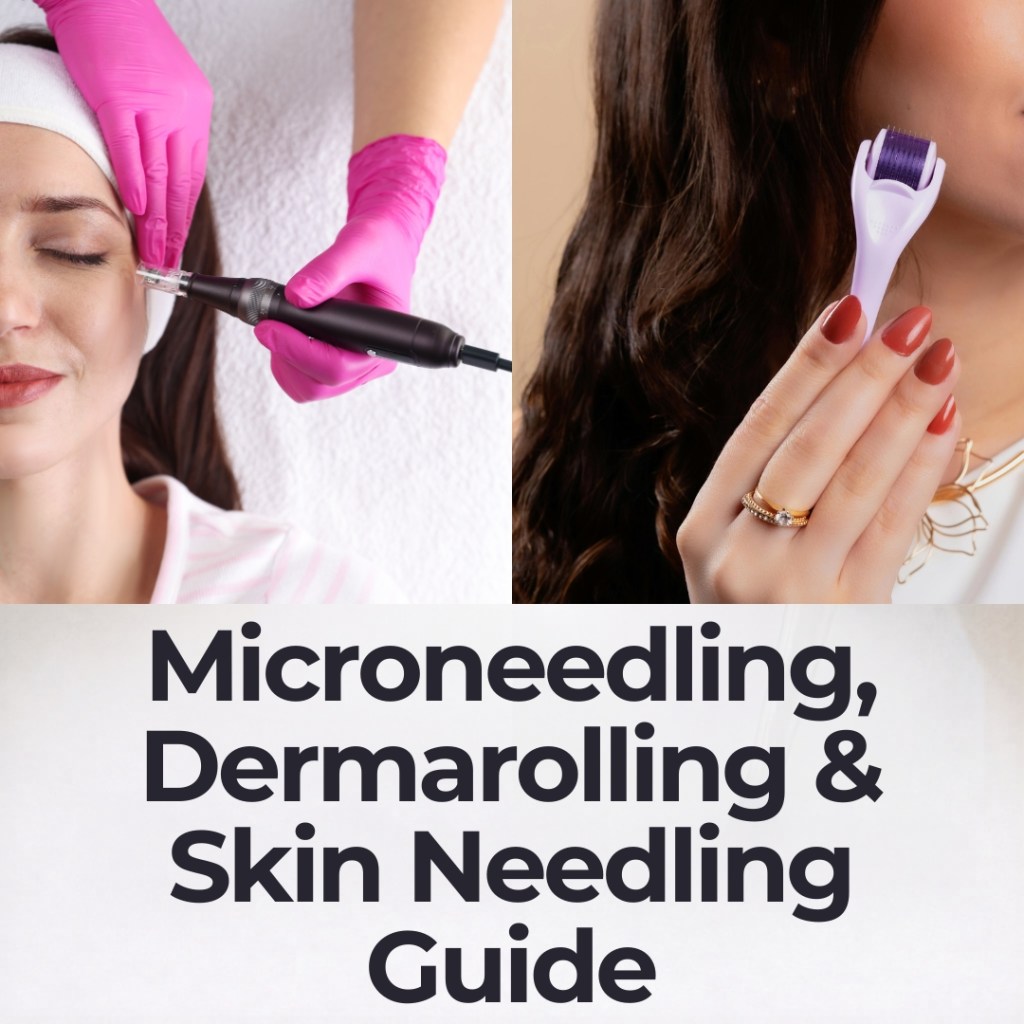
Three names, one core idea: prick the skin with fine needles, trigger a healing response, and watch collagen production follow. But the version your doctor does at the clinic, the version using radiofrequency energy, and the version you roll across your face at home are not interchangeable. The differences in depth, precision, and result are significant.
Microneedling is one of the most searched aesthetic treatments in Singapore right now, and for good reason. It addresses acne scars, enlarged pores, fine lines, and uneven texture in one minimally invasive procedure, without the downtime of laser or the cost of surgery. Understanding which version is right for your concern is what this guide is for.
Standard microneedling (Collagen Induction Therapy)
Standard microneedling, also called Collagen Induction Therapy (CIT), uses a medical-grade device such as a Dermapen or SkinPen to create thousands of precisely calibrated micro-injuries in the skin. The needle cartridge is stamped vertically across the face in controlled passes, with depth adjusted depending on the treatment area and concern, typically between 0.5mm and 2.5mm.
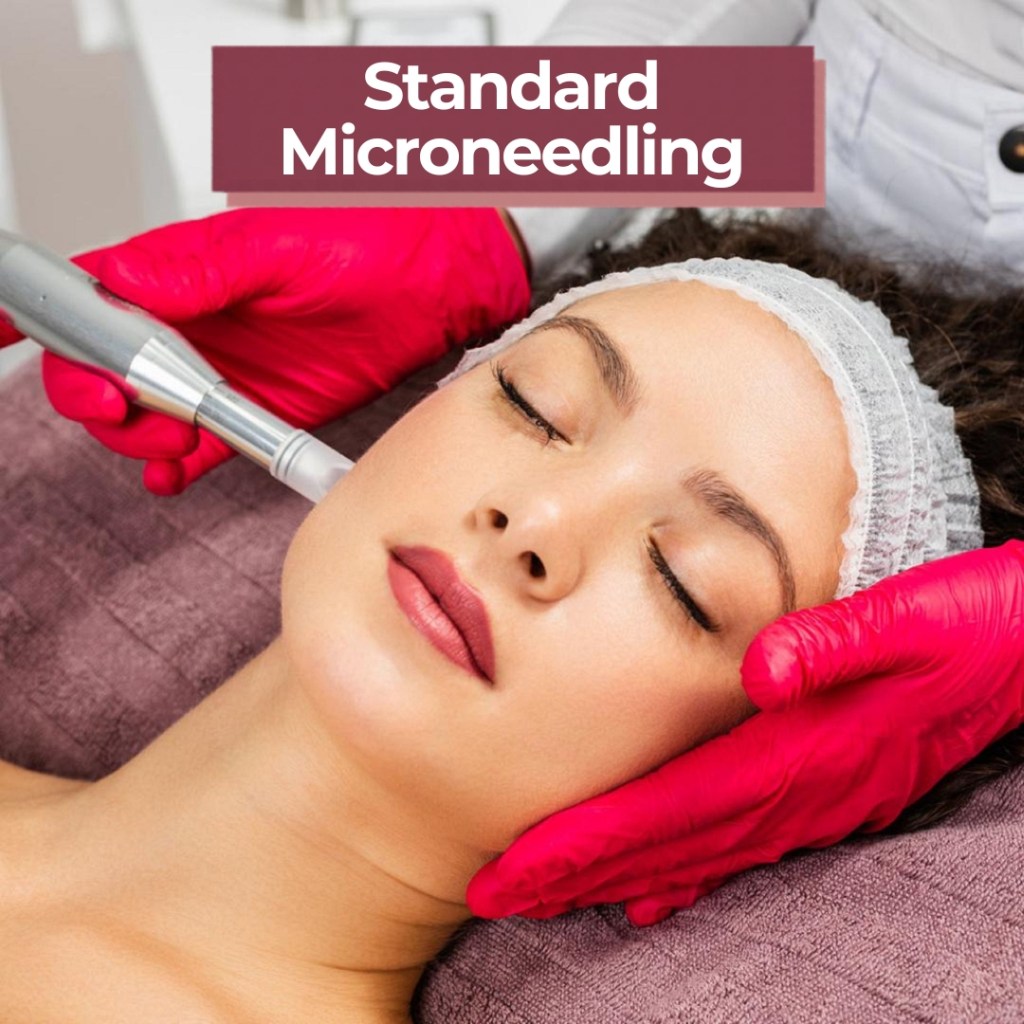
These controlled injuries trigger the skin’s wound-healing cascade: growth factors are released, collagen and elastin synthesis is activated, and new skin cells replace damaged ones over the following weeks.
In Singapore, standard microneedling can be performed by trained therapists at aesthetic spas for superficial concerns, or by licensed doctors for deeper, more targeted protocols.
The American Academy of Dermatology recognises microneedling as clinically effective for improving the appearance of acne scars and skin texture. Multiple sessions are needed: most professionals recommend three to six sessions spaced four to six weeks apart for a full course.
RF microneedling (Radiofrequency microneedling)
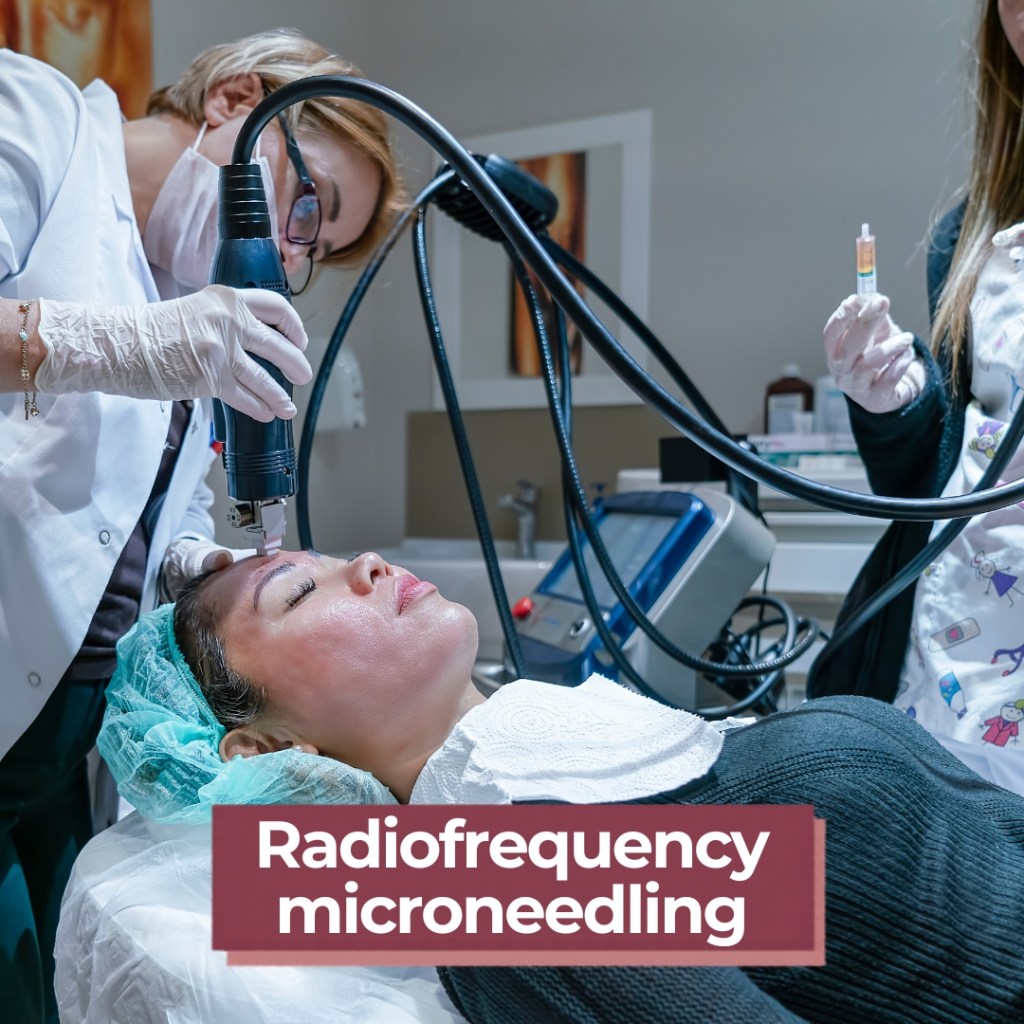
RF microneedling combines standard needle penetration with the simultaneous delivery of radiofrequency energy through the needle tips. The RF energy heats the dermis at a calibrated temperature, stimulating a second layer of collagen remodelling beyond what needles alone can achieve.
The result is more pronounced skin tightening, deeper scar remodelling, and improved skin laxity compared to standard microneedling. Needle depth for RF microneedling reaches 0.5mm to 4mm depending on the device and the area being treated.
The key clinical advantage of RF microneedling in Singapore is its suitability for darker skin tones. Because the RF energy is delivered below the epidermis via insulated needles, there is minimal risk of post-inflammatory hyperpigmentation (PIH), which is a genuine concern with certain laser treatments for Fitzpatrick skin types III to V, common among Singaporeans.
This makes RF microneedling one of the most recommended clinical treatments for acne scar remodelling in Southeast Asian skin.
At-home dermarolling
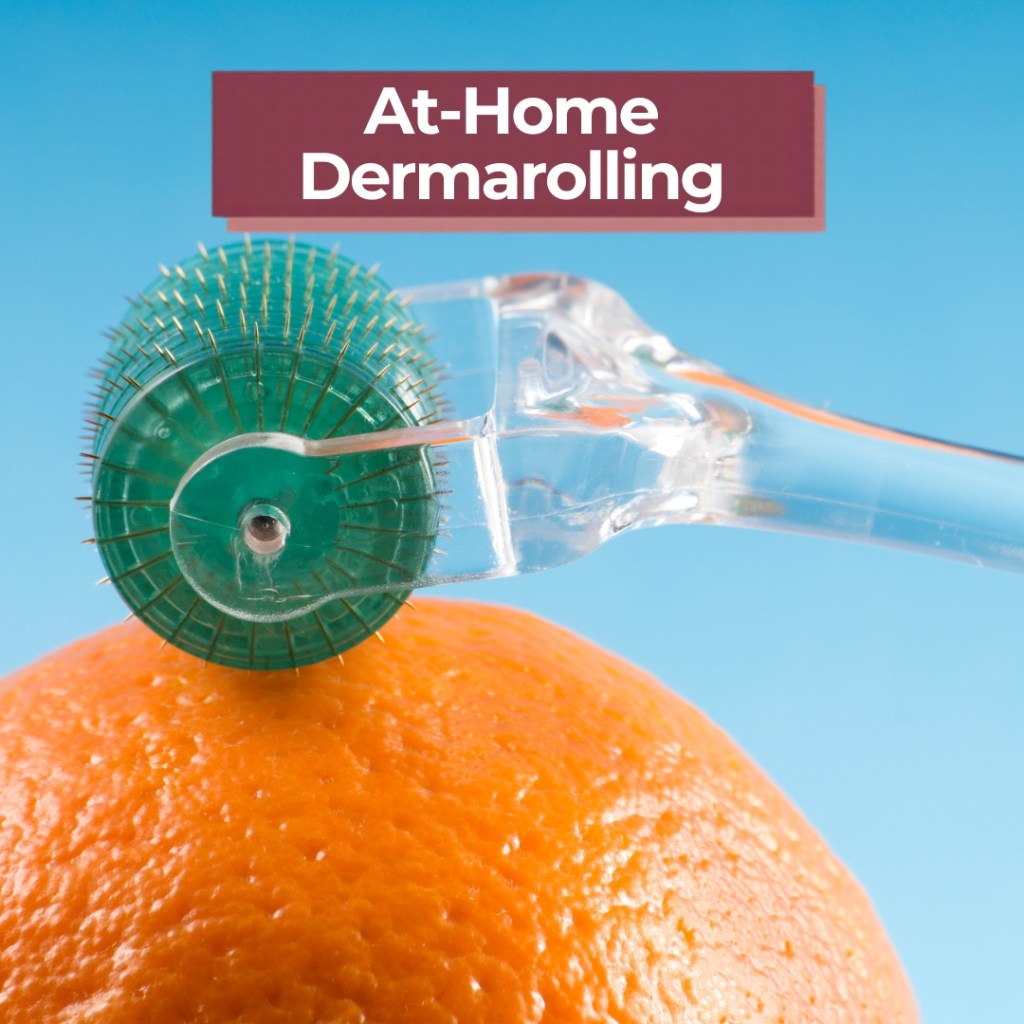
A dermaroller is a handheld device with a drum covered in fine needles, typically 0.2mm to 0.5mm in length, that is rolled across the skin. At these shallow depths, dermarolling does not stimulate clinically meaningful collagen production.
What it does do is create temporary micro-channels in the epidermis that increase the absorption of topical actives such as vitamin C, niacinamide, hyaluronic acid, and retinol by up to 40 times, according to some studies. This is its genuine use case: a product absorption tool, not a clinical treatment.
The risks of at-home dermarolling are real and worth understanding. Rolling technique applied incorrectly causes micro-tears rather than controlled punctures, leading to inflammation rather than healing. Inadequately sterilised rollers introduce bacteria directly into open skin channels.
In Singapore’s humid climate, where bacteria thrive and skin infections spread easily, this is not a theoretical risk. Professional microneedling is always performed with single-use, sterile disposable cartridges in a clinical environment. The at-home dermaroller cannot replicate this, and attempting to use needle lengths above 0.3mm at home carries a genuine risk of harm.
What to expect before, during and after
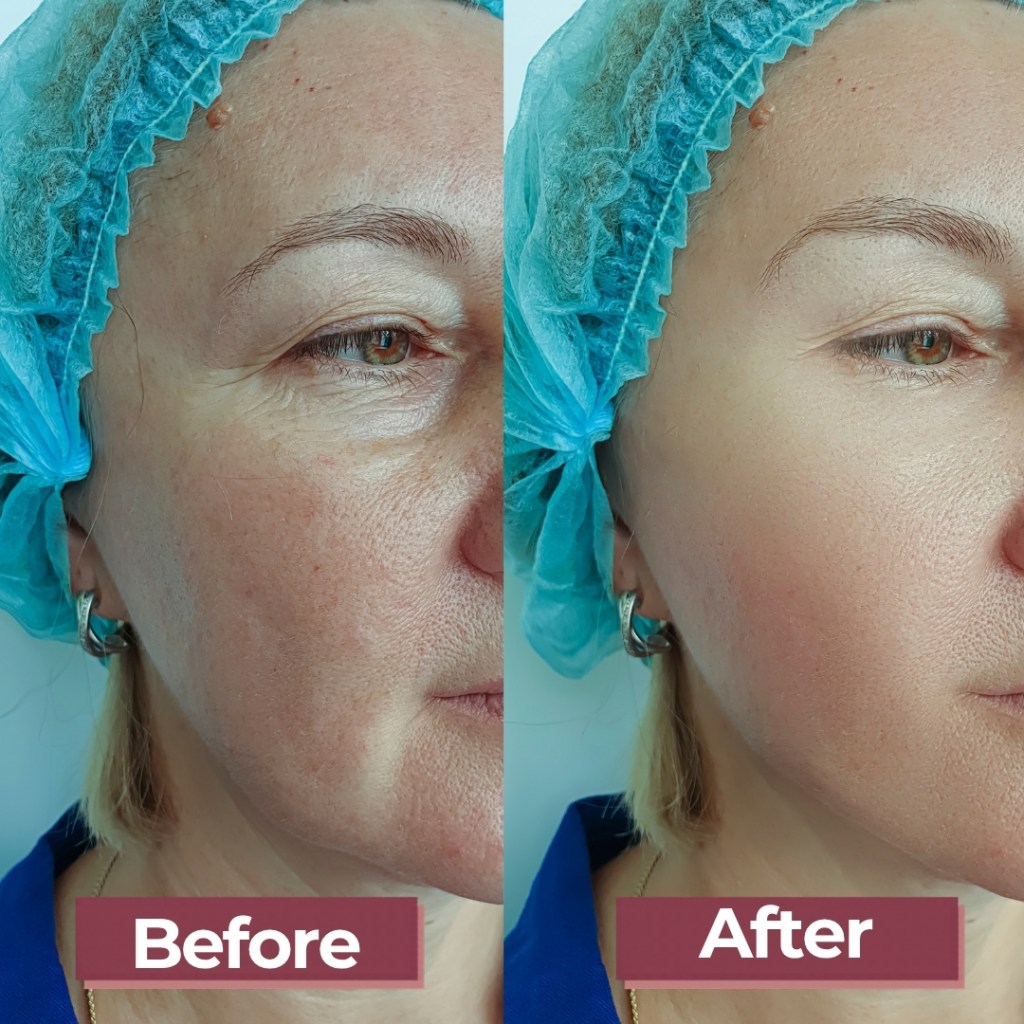
Before any professional microneedling session, stop using retinoids, AHAs, and BHAs for five to seven days. Avoid sun exposure for at least a week before treatment, and arrive at the clinic with clean, product-free skin.
The clinician will apply numbing cream for 30 to 45 minutes before starting. The session itself takes 30 to 60 minutes depending on the area treated.
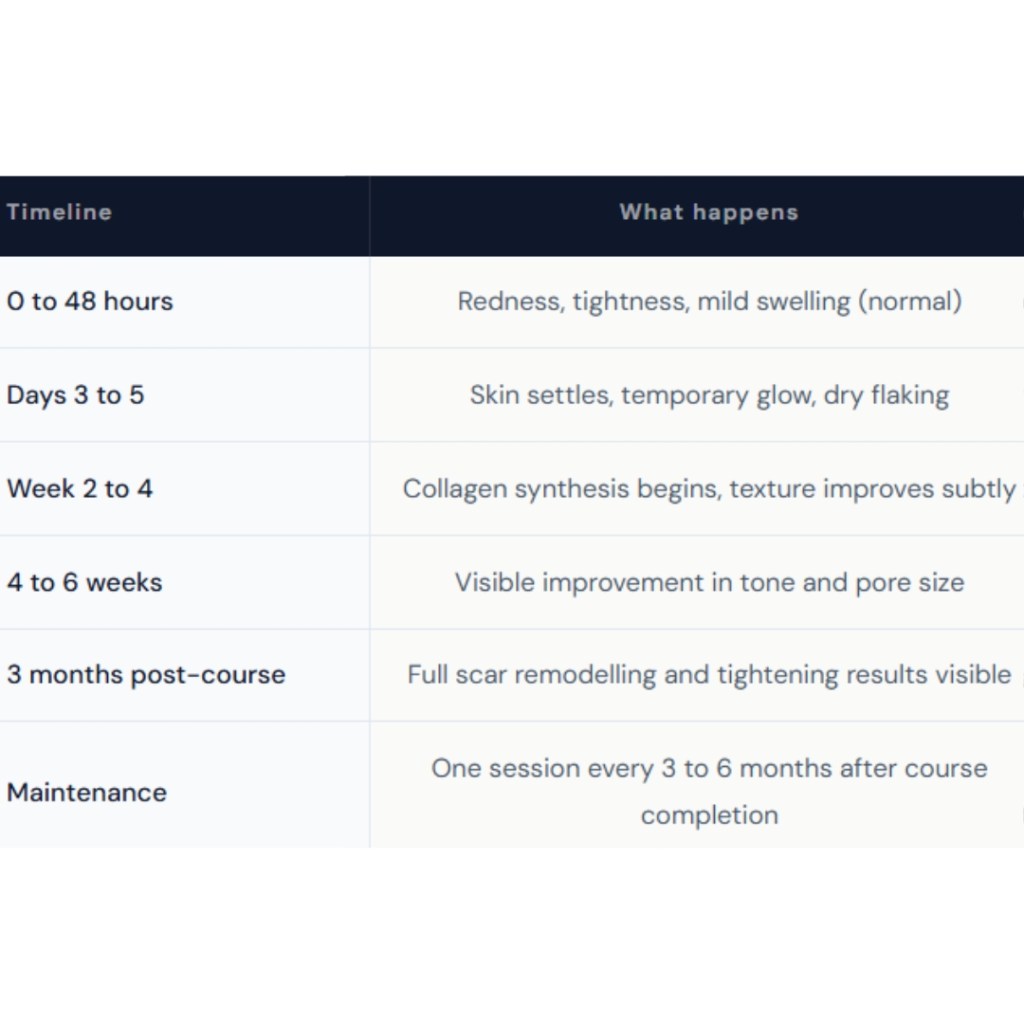
Immediately after treatment your skin will look red, similar to a moderate sunburn. This is normal and begins to subside within 24 to 48 hours for standard microneedling, and 48 to 72 hours for RF microneedling.
Avoid sweating, swimming, and applying active skincare for 48 hours post-treatment. Use only a gentle cleanser, moisturiser, and SPF until the skin has healed. Results develop gradually as collagen is produced over the following weeks.
Results: what to expect and when
Microneedling results are cumulative, not immediate. After the first session you will notice skin that looks temporarily smoother and more luminous as the surface inflammation subsides, but this is not the lasting result.
The real work happens underneath: fibroblast activation, collagen synthesis, and tissue remodelling occur over six to eight weeks following each session.
Most clients see meaningful improvement in texture and scar appearance around four to six weeks after the first session, with the most significant changes visible two to three months after completing a full course.
Is microneedling safe?
Standard microneedling performed with a sterile, single-use cartridge by a trained professional is one of the safest skin-resurfacing procedures available. It does not ablate skin tissue, does not use heat at the surface, and carries no UV risk.
The main post-treatment risks are temporary redness, swelling, and the small possibility of post-inflammatory hyperpigmentation in darker skin tones if treated aggressively. Choosing an experienced practitioner who understands Singapore skin types is the single most important safety decision you can make.
RF microneedling in Singapore is regulated as a medical procedure and must be performed by an MOH-licensed doctor. The gold-plated insulated needles used in devices like Secret RF and Morpheus8 protect the epidermis and make the treatment safe for Fitzpatrick types I through VI, including the medium-to-darker skin tones predominant in Singapore.
You should avoid all microneedling if you have active acne, open wounds, a skin infection, eczema or rosacea in the treatment area, are taking blood thinners, or are pregnant.
Where to go in Singapore
Here are six verified clinics and spas across Singapore offering microneedling treatments, with full addresses and direct links.
Kosme Aesthetics
No-package, no-hard-sell aesthetic studio offering standard microneedling with transparent per-session pricing. First trial session from SGD $100, standard sessions from SGD $200. Three convenient locations across Singapore. Well-suited for clients new to microneedling who want a straightforward, honest consultation before committing to a course.
Address (Orchard Gateway): 277 Orchard Road, #03-08/09, Singapore 238858
Address (PLQ): 2 Paya Lebar Link, #01-05, Singapore 408533
Website: kosmeaesthetics.sg · Google Maps (Orchard)
Bio Aesthetic Medical Spa
Award-winning medical spa with 500+ five-star Google reviews offering microneedling and Secret RF microneedling from SGD $168. Covers both standard and RF microneedling protocols across two accessible locations. Known for equipment in the SGD $30,000 to $80,000 range and transparent pricing with no hard-sell approach.
Address (Orchard): Palais Renaissance, 390 Orchard Road, #03-01, Singapore 238871
Address (Tampines): 300 Tampines Avenue 5, #04-05, Singapore 529653
Website: bioaesthetic.com.sg · Google Maps
Wellaholic
Singapore’s most accessible aesthetic chain, with multiple outlets island-wide including Orchard, Tanjong Pagar, Jurong, Woodlands, and Tampines. Offers Gold RF microneedling from SGD $215 per session with no packages required. Best for clients who want RF microneedling at an accessible price point with consistent protocols across all branches.
Address (Tanjong Pagar): 18 Cross Street, #02-102/103 China Square Central, Singapore 048423
Address (Orchard): 156 Orchard Road, #05-01 Orchard Central, Singapore 238842
Website: wellaholic.com · Google Maps (Tanjong Pagar)
Sozo Aesthetic Clinic
CBD medical aesthetic clinic led by Dr Justin Boey, offering personalised microneedling and RF microneedling protocols with full consultation. Known for customised treatment planning rather than off-the-shelf protocols. Well-suited for clients with complex acne scarring who want a doctor-designed multi-session plan.
Address: 1 Raffles Place, #05-18 One Raffles Place Shopping Mall, Singapore 048616
Website: sozoclinic.sg · Google Maps
The Aesthetic Studio Wellness
Bukit Timah medical spa offering science-backed microneedling combined with bespoke active ingredient serums and LED phototherapy as a finishing step. Consistently recommended for Singapore’s acne-prone and textured skin types. Sessions Monday to Saturday 10am to 7pm, Sunday 9am to 6pm.
Address: 501 Bukit Timah Road, #02-08 Cluny Court, Singapore 259760
Website: aestheticstudiowellness.com.sg · Google Maps
KINS Clinic
Doctor-led aesthetic clinic specialising in acne-prone and microbiome-sensitive skin, offering microneedling as part of multi-step acne scar treatment plans. Particularly relevant for Singapore clients dealing with post-acne hyperpigmentation and textural scarring triggered by the country’s humid climate. Multiple locations across Singapore.
Address: Multiple locations, check website for nearest outlet
Website: kins-clinic.com · Google Maps
The bottom line
Standard microneedling is a clinically validated, accessible treatment for texture, pores, and mild acne scarring. RF microneedling is the more powerful upgrade for deeper scarring, skin laxity, and tightening, and is the preferred choice for moderate-to-severe acne scars in Singapore’s predominantly darker skin type population. At-home dermarolling is a product absorption tool, not a clinical treatment replacement.
For anyone considering microneedling in Singapore, the most important first step is a consultation with an experienced practitioner who can assess your scar type, skin tone, and treatment history. The right session spacing, needle depth, and number of sessions will determine your results more than the device brand.
This guide is brought to you by Glamingo—Singapore’s AI-powered beauty and wellness marketplace. Soon, you’ll be able to discover, compare, and book hair coloring services at featured salons directly through Glamingo. Stay tuned.
Disclaimer: This guide is for informational purposes. Individual salon pricing may differ. Glamingo recommends contacting salons directly for current rates and availability.
 Glamingo Blog
Drop in your comments..