
You’ve seen the before-and-afters, you’ve compared prices across three salons, and you still have the same question no one answers properly: what is actually happening to your skin when pigment gets deposited, and why do some people’s powder brows look sharp at six months while others have gone patchy and grey? It’s not just technique. It’s not just the technician’s hand. The answer involves skin depth, pigment chemistry, and your own biology — and once you understand the mechanism, you’ll know exactly what questions to ask before you book.
The frustration is real. You invest anywhere from $300 to $700 in Singapore for a procedure that’s supposed to last one to three years, and then it behaves nothing like the portfolio photos suggested. Sometimes brows look shockingly dark the next morning — so dark and defined that you genuinely wonder whether something went wrong. Sometimes they fade unevenly, one side pulling ashy while the other holds colour. Sometimes they’re gone within eight months. None of this is random. All of it has a mechanical explanation. Here’s what’s actually going on.
What powder brows actually are — and what separates them from other semi-permanent brow techniques
The difference between microblading, powder brows, and ombré brows (and why it matters for your skin type)
Microblading uses a manual blade to make fine incisions in the skin and deposit pigment into those cuts, creating the appearance of individual hair strokes. It looks incredibly natural — in the right conditions, on the right skin type. The problem is that on oilier skin, those crisp strokes blur and fade poorly as sebum moves through the tissue. Practitioners describe powder brows as a more reliable option for oily skin types, though it’s worth noting this is based on practitioner experience rather than clinical trial data.
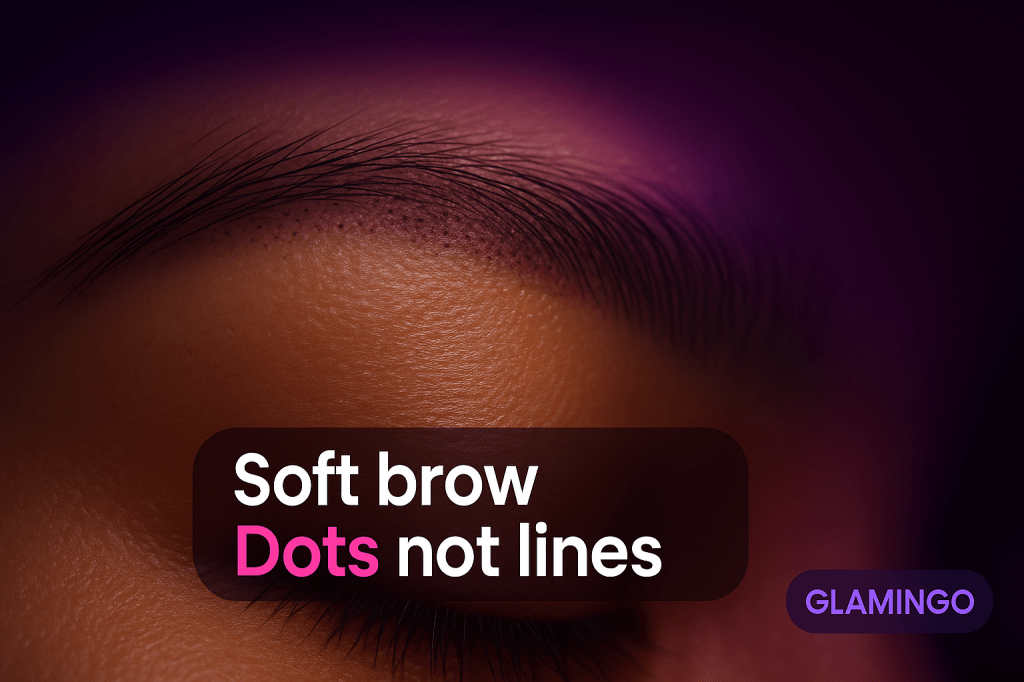
Powder brows use a machine device — similar in concept to a tattoo machine but calibrated for shallower work — to shade pigment across the brow area in tiny dots. The result mimics the look of brow powder makeup: soft, filled-in, gradient rather than hair-like. Ombré brows are a variation of the same technique, lighter at the front and darker toward the tail. The shading method distributes mineral-based micro pigments across the top skin layers, which is mechanically different from microblading’s incision approach — and that difference matters enormously for how the result ages. In Singapore’s context, you’ll also see this marketed as “misty brows” or “Korean powder brows,” but Soft Powder Brows and Misty Eyebrow Embroidery refer to the same underlying shading technique — don’t let the naming variation confuse your research.
What ‘semi-permanent’ means in skin terms: the papillary dermis and why pigment fades
Your skin has layers. The outermost is the epidermis — the part you can touch. Below that sits the dermis, and the upper portion of the dermis closest to the surface is called the papillary dermis. This is exactly where powder brow pigment is targeted. Semi-permanent micropigmentation procedures deposit pigment into the papillary dermis, just beneath the epidermis, using a specialised device. Traditional tattoos go deeper — into the reticular dermis — where pigment is more stable and the body has less ability to shift it over time.
Think of powder brows like stamping ink into blotting paper rather than carving a line into wood. The pigment sits in the upper, porous layers of your skin — close enough to the surface that your body’s natural renewal process gradually lifts it out over time, the way repeated washing eventually fades ink from fabric. That shallow placement is exactly what makes it semi-permanent rather than forever. And it’s also why everything you do to accelerate skin turnover — exfoliating acids, retinoids, sun exposure — shortens how long the result lasts. The depth of pigment deposition within the skin layers directly determines both longevity and how the body metabolises the pigment over time.
How the pigment gets into your skin — and what your skin does with it next
The machine shading process: how pigment is distributed into the upper skin layers
During a powder brows session, the technician uses a digital machine with a fine needle configuration to deposit pigment in a stippling or shading motion across the brow area. Unlike microblading, which makes deliberate cuts, the machine approach works in small, repeated contact points — layering pigment across the target zone rather than placing it in precise lines. The distinction from permanent tattooing lies in both needle depth and pigment type, which together determine the semi-permanent nature of the result. A skilled technician controls the depth carefully — shallow enough to achieve the semi-permanent effect, consistent enough to avoid patchy results.
The quality of that depth control is one of the biggest variables separating a clean, even heal from an uneven or blotchy one. Too shallow and the pigment won’t hold through the initial healing. Too deep and you risk migration — pigment spreading beyond the intended area — or a result that lasts too long and shifts colour unpredictably.
The healing timeline: why your brows look dramatically different on day 1 versus week 4
This is the part that sends a lot of first-timers into a quiet panic. Immediately after the procedure, your brows will look significantly darker, sharper, and more intense than the finished result. One experience that comes up often among those who’ve just had the procedure done: waking up the morning after and wondering if something has gone very wrong with the shape, the colour, or both. It hasn’t. What you’re seeing is initial pigment saturation before the skin’s healing response has begun doing its work.
Over the first week, the skin forms a very fine layer over the pigment as it heals. Brows often look like they’re flaking or peeling slightly — this is normal, and you should not pick at it, because you’ll pull pigment out unevenly. By week two, the surface looks lighter, sometimes alarmingly so. This is the “ghosting” phase, where the skin appears to have lost most of the colour. By week four to six, the true healed result emerges as the skin settles and the pigment that has bonded to the papillary dermis becomes visible through the healed surface. That healed result will be softer and lighter than day one — usually by about 30 to 40 percent. This is not fading. This is healing. The touch-up appointment typically scheduled at six to eight weeks exists specifically to address any unevenness that the healing process reveals.
The role of skin cell turnover in fading — why powder brows are not permanent
Your skin replaces itself continuously. The epidermis completes a full renewal cycle roughly every 28 days, though this slows as you age. Because pigment is deposited at a shallower level than a traditional tattoo, the skin’s natural cell turnover cycle gradually pushes pigment toward the surface and breaks it down — this is the mechanism behind semi-permanence. Your immune system also plays a role: macrophages (the skin’s cleanup cells) slowly break down and carry away pigment particles over time, just as they do with any foreign substance in the tissue. This is a slow process, which is why powder brows last one to three years rather than weeks — but it is a continuous one, which is why touch-ups are eventually necessary.
Why fading is uneven — the factors that accelerate or slow pigment breakdown
Sun exposure and UV degradation of pigment
UV radiation does two things to powder brow pigment. First, it degrades the pigment molecules themselves — breaking down the chemical bonds that give them their colour, which is why sun-exposed areas fade faster and often shift to warmer or ashier tones rather than fading evenly. Second, UV exposure accelerates the skin’s turnover response, moving pigment upward through the layers more quickly. Singapore’s UV Index regularly sits between 10 and 12 — among the highest year-round levels in the world. If you’re commuting, grabbing lunch outside, or spending weekends outdoors without SPF applied above the brows, you are actively shortening how long your result holds. An SPF 30 or higher, applied daily and extended to the brow area, is one of the most straightforward ways to protect your investment.
Skincare actives that interfere: acids, retinoids, and exfoliants
Here is where a lot of skincare-savvy women unknowingly undermine their powder brows. AHAs (like glycolic and lactic acid), BHAs (like salicylic acid), and retinoids all accelerate the skin’s cell turnover rate — which is exactly why they’re effective for texture, tone, and anti-ageing. But that same acceleration works against pigment longevity. If your routine includes a vitamin A derivative at night and an exfoliating toner in the morning, your powder brows are living on borrowed time relative to someone using gentler products. This doesn’t mean you have to abandon your actives permanently — it means being strategic about where you apply them, and understanding that your touch-up interval will likely be shorter than average.
Skin type and sebum production — why oily skin fades faster
Higher sebum production does two things that affect powder brow longevity. Sebum creates a more mobile environment at the surface of the skin, which can accelerate pigment dispersion from the upper layers. It also means the skin’s surface stays more naturally exfoliated, keeping turnover moving. This is a real-world observation from those who’ve tracked their own fading — people with oilier skin consistently notice faster fading — though large-scale clinical data on this specific mechanism in powder brows doesn’t exist yet. The powder brow shading technique is considered more suitable for oily skin than microblading, precisely because distributed shading holds better than hair strokes on sebaceous-heavy skin — but “better” is relative. Faster fading is still the reality, and your touch-up schedule should account for it.
Pigment chemistry — why colour shifts happen over time and how to predict them
Mineral-based versus organic pigments and how they age in the skin
Not all pigments are created equal, and this is genuinely the most under-discussed part of the powder brows conversation. Beauty pigmentation procedures carry documented toxicological considerations depending on pigment formulation and chemical composition — which is a formal way of saying that what goes into your skin matters both for safety and for how your result ages. Mineral-based pigments (iron oxides are the most common) tend to be more stable in tissue but can shift towards reddish or orange tones as they break down. Organic pigments offer brighter, more vivid initial colour but may fade less predictably. The specific pigment formulation — not just the brand name — determines what colour shift, if any, you’ll see at 18 months.
What causes the grey, ashy, or red tint that appears in faded brows
The grey or ashy tone that appears in some faded powder brows is usually the result of a pigment that was mixed too cool for the individual’s skin undertone, or a mineral pigment that has broken down in a way that leaves the cooler components more visible than the warm ones. Red or orange undertones emerging at the tail of the brow are typically iron oxide-based pigments shifting as they oxidise in the tissue — this is more common when traditional tattooing inks are used instead of pigments specifically formulated for semi-permanent makeup. The two are not interchangeable, and using the wrong one is a primary cause of the “my brows went red at eight months” experience. This is exactly why the pigment brand and formulation question matters before you book — not after.
What to ask before you book — the mechanism questions that separate a skilled technician from a risky one
Skin depth, pigment brand, and aftercare: the three non-negotiables
A skilled powder brows technician should be able to explain their depth approach — how they calibrate needle depth for different skin types, and what adjustments they make for oily versus drier skin. They should be able to name the pigment brand they use and explain why that brand rather than another. “I’ve used it for years and clients are happy” is not a mechanism answer. “It’s an iron oxide-based pigment formulated specifically for superficial micropigmentation, with a warm undertone that works well with warmer Asian skin tones” — that’s a technician who understands what they’re putting into your skin.
Aftercare instructions should include specific guidance on keeping the brow area dry for the first 7 to 10 days, avoiding all exfoliating actives on the brow area for at least four weeks, and applying SPF consistently once healed. Pigment type and formulation compliance are relevant factors in any semi-permanent procedure — a good technician should be able to confirm that their pigments meet relevant regulatory standards, particularly for procedures performed in Singapore where MDA guidelines apply.
Touch-up timing: what the evidence suggests versus what salons typically recommend
Most salons recommend a touch-up at six to eight weeks post-procedure. This timing is well-established in practice and makes biological sense — it’s after the initial healing is complete but before significant fading has begun, giving the technician a clear view of what needs correcting. Annual or biennial maintenance touch-ups are typically recommended to sustain the result, but the honest answer is that how frequently you need one depends on your skin type, sun exposure habits, skincare routine, and the pigment used. Someone in Singapore spending significant time outdoors with an active-heavy skincare routine may find they need a maintenance touch-up every 12 months. Someone with drier skin, disciplined SPF use, and a gentler routine might stretch to 18 to 24 months comfortably. Ask your technician to give you a realistic estimate based on your specific profile — not a generic timeline from their price list.
Before you book a powder brows appointment, ask the technician one specific question: what pigment brand and formulation do they use, and is it specifically formulated for semi-permanent makeup rather than traditional tattooing? The answer tells you whether they understand that pigment chemistry — not just technique — determines how your result ages. A technician who can answer this clearly is one who understands the mechanism, not just the motion.
If you’re ready to find a powder brows technician in Singapore who can actually answer that question, Glamingo lists verified semi-permanent brow providers with real client reviews — so you can compare before you commit. Browse powder brows providers near you →
 Glamingo Blog
Drop in your comments..