
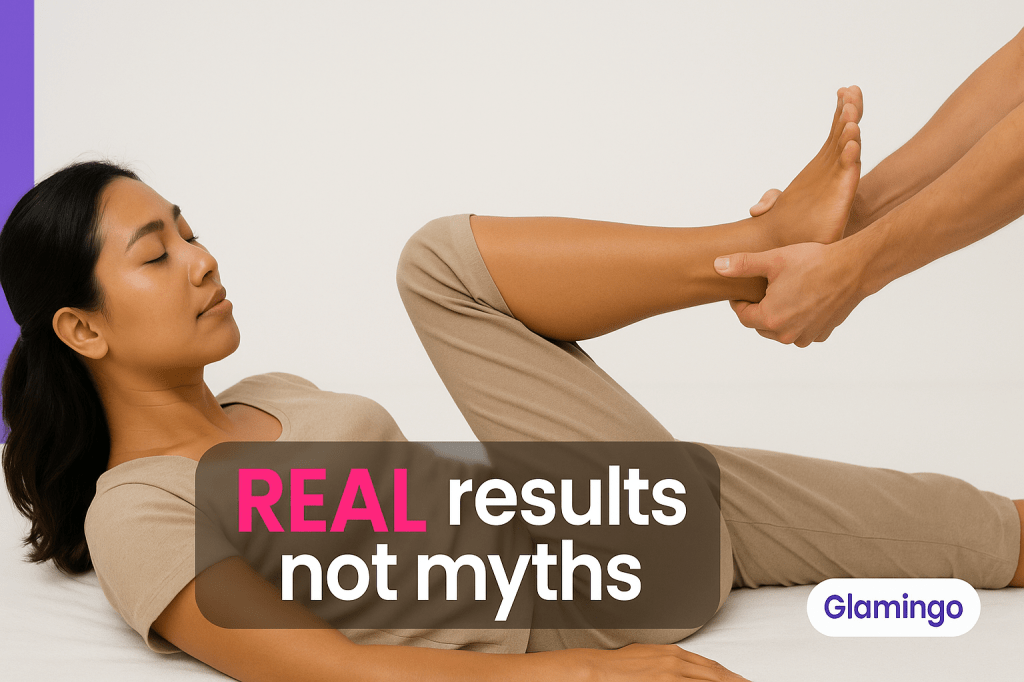
The myth on the table: Thai massage is just a fancy stretch with a wellness price tag
You book a Thai massage expecting to feel stretched out and vaguely zen, maybe sleep better that night. What you probably did not expect was a measurable drop in your stress hormone levels, or a genuine impact on physical fitness markers. The treatment has been quietly accumulating research it rarely gets credit for — but that same research also puts a ceiling on several claims being made on its behalf.
If you have ever walked out of a session in a slightly dazed, good-humoured state and wondered whether you just paid $120 for an elaborate nap — the question is fair. Thai massage marketing in Singapore often swings between two extremes: vague wellness language about “energy flow” and “detoxification,” or the opposite overcorrection of positioning it as almost physiotherapy. Neither version is entirely honest with you. What the actual research shows is more nuanced, more interesting, and — in a few specific areas — more impressive than most treatment menus let on.
What actually happens to your body during a session
Think of Thai massage like a well-researched physiotherapy exercise that also happens to feel good. The stretching and compression produce real, measurable effects on your body — similar to how assisted stretching in a physio session genuinely changes how your muscles respond. The practitioner moves your joints through ranges of motion you would not typically access on your own, applies rhythmic pressure along defined pathways on the body, and uses their bodyweight — not just their hands — to create sustained compression across muscle groups. But the claims about invisible energy channels running through your body are the equivalent of a physio telling you they are realigning your chi. The physical outcomes have evidence behind them. The metaphysical framework does not. You can appreciate the result without accepting the explanation.
That distinction matters when you are trying to decide what to book, how often to go, and whether the price tag at that atas spa near your office is actually justified by what you will get out of it.
Myth 1 — It is only a relaxation treatment
What one session does to your cortisol levels
This is where the research is most useful for the average person walking into a session. A randomised study measuring cortisol — the primary stress hormone your body produces in response to pressure, poor sleep, and sustained anxiety — found significant decreases following a single Thai massage session in a group of 36 self-reported healthy adults. The same study also measured oxytocin, the hormone associated with social bonding and calm. Both moved in a direction that suggests something genuinely physiological is happening, not just a subjective feeling of relaxation.
The sample size is small enough to warrant caution — 36 participants is not a sweeping population study — and the findings are directionally consistent with broader massage research rather than being uniquely groundbreaking. But “measurable hormonal response after one session” is meaningfully different from “you will feel nice for a few hours.” It is worth knowing the distinction.
The verdict on stress and nervous system claims
The case for Thai massage as a genuine nervous system intervention — rather than a premium way to lie down — has real support. A randomised clinical trial examining Thai massage as a recuperative technique measured its effects on responses from the body’s involuntary control system (the autonomic nervous system), placing it within evidence-based recovery research rather than purely wellness marketing. Where this gets interesting for anyone dealing with chronic stress is that the mechanism is not purely about relaxation in the subjective sense. The body’s stress-response system appears to be responding to the physical intervention directly. That is not nothing.
Myth 2 — It is the same as any other massage
Why the passive stretching component changes the outcome
Swedish massage works primarily through gliding strokes across the skin surface and muscle tissue, targeting circulation and superficial tension. Deep tissue goes deeper into the muscle, targeting chronic holding patterns and fascial restriction. Both are valuable. Neither is quite what Thai massage is doing structurally.
What differentiates Thai massage is its reliance on what sports medicine calls passive range-of-motion work — where your body is moved through a stretch by someone else rather than by your own muscular effort. This is the same principle used in physiotherapy-assisted stretching, and it allows the muscles to release tension they would resist if you were actively engaging them to hold the position yourself. Combined with the rhythmic compression work — which applies sustained pressure in pulses rather than in the continuous gliding strokes you get with Swedish — the session targets both the muscular and connective tissue systems in a way that is structurally distinct from most table massage. Describing it as “massage” at all is slightly misleading; it is perhaps more accurately understood as assisted yoga integrated with pressure-point therapy, rooted in traditional Thai health culture that frames it less as indulgence and more as a preventive and medical practice.
What this means if you are comparing it to deep tissue or sports massage
The practical implication is that these treatments are not interchangeable depending on what you are trying to address. If you have specific muscular adhesions from training, deep tissue may be more targeted. If you are dealing with restricted mobility, stiffness from desk work, or a general sense that your body is not moving as freely as it should — the passive stretching component of Thai massage is doing something that other modalities are not. The comparison depends entirely on what problem you are solving.
Myth 3 — It speeds up athletic recovery
What the soccer player trials actually showed
A randomised clinical trial examined Thai massage specifically as a recuperative technique in an athletic context, measuring its effects on the autonomic nervous system responses associated with recovery. Separately, research into sport recovery also noted measurable effects of Thai massage on lactic acid levels and pulse rate following exercise — lactic acid being the metabolic byproduct that accumulates in muscles during intense activity and contributes to the soreness and fatigue you feel in the hours after training. The findings suggest a physiological recovery mechanism is at work, not just the subjective sensation of feeling better after lying down for an hour.
These are not trivial findings. In athletic populations, the data is reasonably consistent that something real is happening.
Who this evidence applies to — and who it does not
Here is where the fine print matters. The populations studied are athletes — people undergoing regular high-intensity physical stress. The evidence base is not speaking to what happens when a marketing manager with a sedentary work week books a session on a Friday evening hoping it will “flush out toxins” from a workout she did on Tuesday. The physiological effects on lactic acid and autonomic recovery are meaningful in a body that has recently undergone significant physical stress. Whether those same effects translate meaningfully in a less active person is genuinely unknown, because that person has not been studied. You can still benefit. You just should not borrow the athlete-specific evidence to justify those expectations.
Myth 4 — It relieves pain conditions
The knee osteoarthritis trial explained plainly
This is one of the more compelling research areas, and it deserves a clear explanation. A randomised controlled trial compared Thai massage combined with Thai herbal compress against oral ibuprofen for the symptomatic treatment of knee osteoarthritis. The fact that it was tested against a standard pharmaceutical intervention — rather than against a placebo only — is what makes this worth taking seriously. The results positioned Thai massage as a testable clinical intervention with a plausible role in managing musculoskeletal discomfort.
That is a meaningfully different claim than what most spa treatment menus are making. A randomised controlled trial comparing your treatment to ibuprofen is not nothing. It is legitimate preliminary evidence for a specific application.
When to use it as a complement to medical treatment, not a substitute
The caveats are important here. Knee osteoarthritis is a specific clinical condition with a well-defined set of symptoms and established treatment pathways. The trial findings do not extend to general claims that Thai massage “relieves pain” in a broad sense — chronic back pain, migraines, fibromyalgia, or any number of conditions that spa menus sometimes gesture toward. If you have a diagnosed musculoskeletal condition and are considering Thai massage as part of your management approach, the research supports that conversation happening with your doctor or physiotherapist. If you are hoping a booking fixes a mystery ache with no clinical diagnosis behind it, the evidence is less specifically encouraging.
Myth 5 — The energy line system has been scientifically proven
What overlaps with acupuncture research
Thai massage is traditionally structured around sen lines — energy pathways in the body through which life force is said to flow, and which the practitioner’s pressure-point work is intended to unblock or balance. This is the part of the treatment framework that gets described in spa brochures with a confidence the science does not quite support. Acupuncture research has noted that the pressure points used in Thai massage — referred to in that tradition as ashi points — overlap with those used in Japanese shiatsu and in Swedish deep tissue massage, suggesting a shared mechanistic basis across traditions rather than a uniquely distinct energy system. In other words, these points may matter. The reason they matter may not be the one the traditions claim.
What remains unverified — and why that matters before you book
No independent anatomical research has validated the existence of sen lines as a distinct physiological structure. What is measurable are the downstream effects of applying pressure to specific points — changes in nervous system response, local tissue response, referred sensation. What is not measurable, and has not been independently verified, is the energetic framework that traditional practice uses to explain those effects. This is not a reason to dismiss the treatment. It is a reason to be clear-eyed about what you are being sold. The physical outcomes have evidence. The metaphysical framework is a belief system — a culturally meaningful and historically significant one, but not a scientifically validated one.
Myth 6 — It boosts your immune system
The CD4+ T cell study and why you should read the fine print
A randomised crossover study found that traditional Thai massage may promote immune function in elderly participants through changes in senescent CD4+ T cell subsets — a specific immune cell population associated with ageing-related decline in immune response. The finding is interesting as an early signal. It is not a basis for claiming that booking a Thai massage will boost your immunity in any meaningful general sense, particularly if you are a healthy adult in your thirties. The population studied — elderly participants experiencing age-related immune decline — is specific. The mechanism studied is specific. Extrapolating from that to a broad immunity claim aimed at younger, healthy adults is a stretch the data does not support. When you see “immune-boosting” on a treatment menu, this is the evidence they are drawing on. Now you know how far that reach extends.
The real problem: what happens between the research lab and the treatment room
Standardisation gaps — the practitioner training issue
One of the most consistent frustrations among regular Thai massage clients — and something the research quietly acknowledges as a genuine limitation — is that the experience varies enormously depending on who is in the room with you. Go back to the same spa with a different therapist and you may have a completely different session. This is not just a personal impression. Standardisation gaps are a known limitation in massage research generally, with studies noting that controlled protocols used in trials may not reflect what is delivered in typical clinical or commercial settings. In research conditions, practitioners follow defined sequences with defined pressure levels. In a Singapore spa on a Tuesday afternoon, those variables are almost entirely down to the individual therapist’s training, experience, and energy on that particular day.
Thai massage practitioner training in Singapore ranges from rigorous multi-week programmes with clinical components to short certification courses that are closer to introductory workshops. There is no single enforced standard. This is the practitioner-lottery problem that anyone who books regularly will recognise — the session that changed how your lower back felt for a week, and the session that just made you feel mildly bruised, delivered by two people with the same job title in the same venue.
How to read a Thai massage menu with better scepticism
When a spa menu promises “detoxification,” treat it as a red flag, not a selling point. Lymphatic drainage has a mechanistic basis in massage research; “toxin removal” does not correspond to any measurable physiological process the treatment produces. When a menu promises pain relief, check whether it specifies what kind of pain — because the evidence for musculoskeletal discomfort is meaningfully different from the evidence for headaches or general fatigue. When a menu references “ancient healing energy lines” without any further qualification, you are in the realm of tradition and marketing rather than verified mechanism. None of that means the session will be bad. It means you are being asked to evaluate a treatment using a framework that is only partially grounded in what the research actually shows.
The verdict: what Thai massage genuinely delivers and what it does not
Thai massage produces real, measurable physiological effects. A single session can produce a meaningful reduction in cortisol. The passive stretching component does things to your range of motion and muscle response that Swedish massage does not. In athletic populations, the recovery evidence is reasonably solid. For specific musculoskeletal conditions like knee osteoarthritis, there is clinical trial evidence that positions it as a credible complementary intervention — not a replacement for medical care, but a legitimate part of a management approach. These are real findings. They deserve more credit than the treatment typically gets in Singapore wellness marketing, which tends to either undersell it as pure relaxation or oversell it with unsubstantiated claims about energy, immunity, and detoxification.
What it does not deliver — at least not on the basis of current evidence — is a validated energy system, a meaningful immunity boost for healthy younger adults, or standardised outcomes regardless of who delivers the session. The treatment is only as good as the practitioner in the room, and that is a variable the research cannot control for you. You have to do that part yourself.
Before your next booking, ask the spa or therapist one specific question: what training certification does the practitioner hold, and is the session protocol consistent between therapists? If they cannot answer clearly, that variability gap — not the treatment itself — is the reason your results may differ from what the research suggests is possible.
If you want to take the guesswork out of finding a well-reviewed Thai massage practitioner in Singapore, Glamingo lets you filter by treatment type, read verified client reviews, and compare options near you before you commit to a booking. Search Thai massage providers on Glamingo →
 Glamingo Blog
Drop in your comments..