
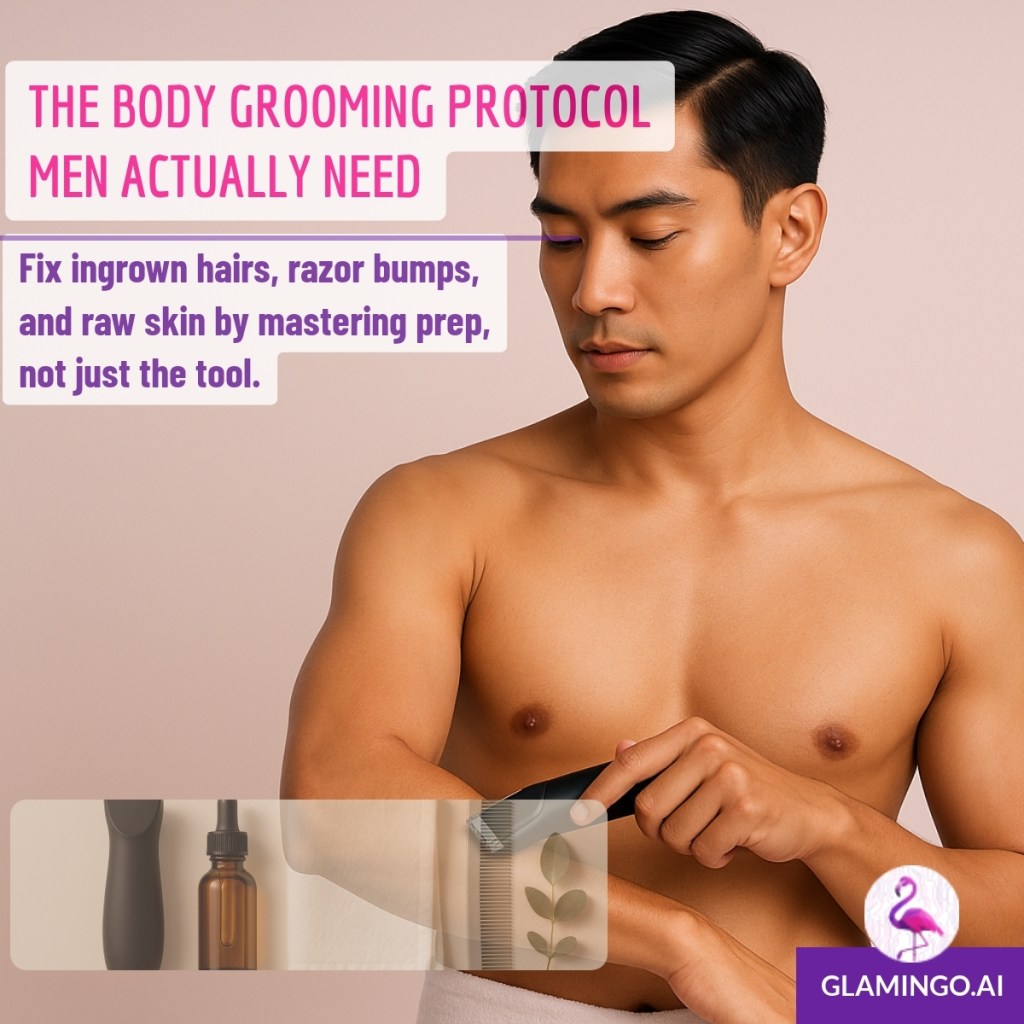
Most body grooming problems — ingrown hairs, razor bumps, raw skin after waxing — come down to technique and timing, not the tool you’re using. The frustration is familiar: results that are uneven, skin that flares up the next morning, bumps that weren’t there before you started. That’s what happens when you apply face-shaving logic to body skin. Body skin is thicker, folded, and covers a wider range of terrain — it needs a different approach entirely.
If you’ve been doing the same thing since you first picked up a razor in your teens and just… hoping for better results, this is the reset you didn’t know you needed. And if you’re reading this for a partner or family member who keeps complaining about razor bumps and rawness, this protocol will give you something practical to share — not a ten-step routine, just a smarter order of operations.
What This Protocol Covers — and What It Doesn’t
This is a practical guide to body grooming for men: chest, stomach, underarms, groin, and back. It covers the five main methods available — trimming, shaving, waxing, hair removal creams, and laser — matched to specific body zones where each actually makes sense. It does not cover facial grooming, which has its own set of considerations around grain direction, skin sensitivity, and product choice.
The Body Zones Most Men Are Getting Wrong
The groin and underarms are the areas where technique failures show up most visibly — redness, ingrown hairs, and bumps that linger for days. These zones have folded skin, variable hair direction, and more friction from clothing throughout the day. Chest and stomach are generally more forgiving but are frequently over-shaved when trimming would give a cleaner result with less irritation. The back is a logistics problem as much as a technique problem — you often need either a specialist tool or another person involved.
How Singapore’s Humidity Changes the Equation
In Singapore’s year-round humidity of around 80%, dense body hair traps heat and sweat in a way that genuinely affects comfort — not just aesthetics. More practically, the humidity means your skin is already in a semi-hydrated state much of the time, which sounds helpful but also means sweat and friction under clothing after grooming can aggravate freshly shaved or waxed skin faster than you’d expect in a cooler climate. Post-grooming care here isn’t optional — it’s the step that prevents the next day’s irritation.
Step 1 — Choose Your Method by Zone, Not by Default
Think of body hair removal like cutting through different types of fabric. A sharp blade on dry denim tears the weave and leaves a rough edge. The same blade on pre-dampened, loosened fabric cuts cleanly. Your skin and hair follicles are the fabric — prep determines whether the cut is clean or traumatic. The tool is almost secondary. Which is exactly why choosing the right method for each zone matters before you reach for anything.
There are six recognised methods for removing unwanted hair: shaving, trimming, waxing, hair removal creams (also called depilatories), laser hair removal, and electrolysis — each with a different profile of pain, cost, duration, and risk to the skin surface. Most men default to whatever they used on their face and scale it up. That’s where the problems start.
Trimming: The Safest Starting Point for Chest, Stomach, and Groin
A body hair trimmer with a guard is the lowest-risk method for most zones. It does not break the skin surface, so there’s no entry point for irritation or infection. For chest and stomach, trimming to a short, even length is often all you need — especially if your goal is reduction rather than removal. For the groin, a trimmer with a guard gives you control without the shaving risks of nicks and ingrowns. Evidence from surgical site infection research — which examines how different hair removal methods affect skin surface integrity — supports clippers as a lower-risk option than razor shaving, though it’s worth noting that research was conducted in clinical settings, not grooming contexts. The underlying mechanism still holds.
Shaving: When It Works and Where to Be Careful
Shaving gives you the smoothest result but the highest irritation risk if done without proper prep. It works well for underarms and legs if technique is correct. It’s genuinely not ideal for the groin unless you’re experienced and meticulous about prep — the skin folds and variable hair direction in that zone make clean, even results harder to achieve and bumps easier to develop. Keep a sharp, fresh blade — a dull blade requires more pressure, which is friction the skin doesn’t need.
Waxing: What to Know Before Your First Appointment
Waxing removes hair from the root, which means results last longer — typically three to six weeks — but the process requires the skin to tolerate more acute stress than shaving. The short version of what most first-timers don’t know: if your hair is longer than the wax can grip cleanly, trim it shorter first — this makes the process less painful and more even. For chest, stomach, and back, professional waxing is worth considering over DIY, particularly if you have dense or coarse hair.
Hair Removal Creams: How to Use Them Without a Reaction
Hair removal creams — depilatories — work by chemically breaking down the hair structure at the skin surface. They are painless and give a smoother result than trimming, but the chemicals involved (typically thioglycolate-based formulas) can irritate sensitive skin. Always do a patch test 24 hours before full use, use a product specifically formulated for the body zone you’re targeting, and never leave it on longer than the instructions state. The extended “maybe it’ll work better if I leave it longer” logic is how skin burns happen.
Laser Hair Removal: Who It Works For, What to Expect
Laser targets the pigment in hair follicles to disable their ability to regrow hair over multiple sessions. It works best on darker hair against lighter skin — the contrast helps the laser find its target. For men with Asian skin tones (Fitzpatrick III–V), which is most men reading this in Singapore, a consultation with a qualified clinic is genuinely necessary before you start — not as a disclaimer, but because the settings matter significantly for avoiding post-inflammatory darkening (hyperpigmentation) of the skin after treatment. Results require multiple sessions and are not always permanent, but reduction is typically significant.
Step 2 — Prep Your Skin Before You Groom
This is the step that separates a clean result from a reactive one. Back to the fabric analogy: you wouldn’t try to cut through stiff, dry denim. The same principle applies here.
The Shower-First Rule and Why Timing Matters
The best time to shave is immediately after a shower — warm, moist skin has shed excess oil and dead skin cells that would otherwise clog the blade and increase drag. Wetting the skin and hair softens it directly, reducing the resistance the blade encounters. This is the single most impactful timing adjustment most men aren’t making. Not a new razor, not a better cream — just doing it after the shower instead of before.
For shaving, use a moisturising shaving cream or gel rather than dry-shaving or using soap. A moisturising shaving cream maintains surface lubrication between the blade and skin, directly reducing friction-related irritation and post-shave redness. Soap strips the surface and provides far less slip.
What to Pause Before Waxing (Including Retinoids)
Retinoid creams — vitamin A derivatives that speed up the skin’s natural cell turnover cycle — must be paused before waxing. They thin the top layer of skin, which increases the risk of the wax pulling skin rather than just hair. If you’re using a retinoid product on your body (some men use them for back acne or texture), stop at least five to seven days before a waxing appointment. Also avoid exfoliating the area — physically or chemically — in the two days before waxing.
Step 3 — Technique by Zone
Chest and Stomach
If you’re trimming, work against the grain with a guard to get an even result. If you’re shaving, shave in the direction of hair growth to minimise skin irritation and reduce ingrown hair formation — chest hair tends to grow downward, but check your own pattern before starting. Use short strokes rather than long sweeping ones. Rinse the blade frequently.
Underarms
Underarm hair grows in multiple directions, which is why shaving against the grain in this zone causes consistent irritation for most men. Shave down first, then across, rather than against the grain. A trimmer is a perfectly valid option here if smoothness isn’t your goal — and in Singapore’s heat, reducing bulk rather than full removal is often enough for comfort.
Groin and Intimate Areas
Use a trimmer with a guard as your first line of approach — this is the zone where the stakes of a shaving mistake are highest. If you want to shave specific areas, do it after your shower with a fresh blade, apply shaving cream generously, and use short strokes with the grain. Pull the skin taut where needed to flatten folds before the blade passes over. Never rush this zone. The post-grooming care here is also more important: tight clothing immediately after will cause friction on freshly shaved skin.
Back (When You Need a Second Method or Another Person)
The back is a logistics problem. DIY trimming with a long-handled body trimmer works for maintenance — there are purpose-built tools for this. For waxing or more thorough removal, a professional appointment is the practical answer. Asking a partner to help with a back trimmer is also a perfectly reasonable solution and significantly less awkward than manoeuvring a razor behind your own shoulder blades.
Step 4 — What to Do Immediately After Grooming
Cooling, Moisturising, and Reducing Friction
Rinse the area with cool or lukewarm water after shaving — not hot. Pat dry, don’t rub. Apply a fragrance-free moisturiser or a gentle aftershave balm (not an alcohol-based splash, which stings and dries the skin surface). In Singapore’s heat, a lightweight gel moisturiser sits better than a heavy cream. If you’ve waxed, a cool compress for a few minutes followed by a calming lotion with aloe vera or allantoin will reduce the surface redness faster.
What to Avoid in the 24–48 Hours After
For the 24 to 48 hours after shaving or waxing, avoid intense exercise that generates prolonged sweat contact with the groomed area, tight synthetic clothing that traps heat, and any exfoliating products on the treated zone. Swimming in a chlorinated pool immediately after waxing is also a reliable way to turn mild redness into genuine irritation. Give the skin surface time to settle before you stress it again.
Maintenance: How Often, and When to Reassess Your Method
There’s no universal answer here because hair growth speed varies significantly between individuals. A rough guide: trimming can be done every one to two weeks as needed. Shaving is typically every two to four days for a smooth result, depending on growth rate. Waxing, when done professionally, typically lasts three to six weeks. Hair removal creams fall somewhere between shaving and waxing in duration — usually one to two weeks.
The more useful question is whether your current method is working. If you’re consistently getting bumps in a specific zone, that’s not bad luck — it’s a signal that either the method, the prep, or the aftercare needs adjusting. Try one variable at a time rather than overhauling everything at once. Start with timing (post-shower), then direction, then method. Most men who switch to trimming in the groin zone after years of shaving report an immediate reduction in post-grooming irritation — not because trimming is magical, but because it stops the cycle of repeated skin surface trauma.
The One Thing to Do This Week
This week, shift your body grooming session to immediately after your shower instead of before — wet, warmed skin with loosened hair requires less blade force, which is the single most direct change you can make to reduce post-shave bumps and irritation without buying anything new.
If you’re thinking about trying professional waxing or laser hair removal rather than going it alone, Glamingo has verified options for men’s grooming treatments near you — with real reviews from men who’ve actually been. Find a provider near you →
 Glamingo Blog
Drop in your comments..