
You’ve invested in a salon colour session, sat through two hours of processing, and walked out with exactly the shade you wanted — only to watch it fade, dull, or turn brassy within three weeks. The problem usually isn’t the colour itself. It’s what happens to your hair’s structure before, during, and after the chemical process that determines how long and how well colour holds. Hair is, as one particularly useful way of thinking about it puts it, biologically dead but chemically alive — and that chemical activity continues for days after you leave the salon chair. This protocol is built around that reality.
If you’ve ever followed every aftercare instruction religiously and still had your colour tank by week four, you’re not doing something wrong. You’re missing information that most salons don’t have time to explain during the appointment. This protocol fills in those gaps — the structural science, the timing logic, and the specific decisions that actually move the needle on colour longevity.
What colour chemistry is actually doing to your hair (so the rest of this protocol makes sense)
How oxidative dye enters the hair shaft — the cuticle lift, the pigment deposit, the structural trade-off
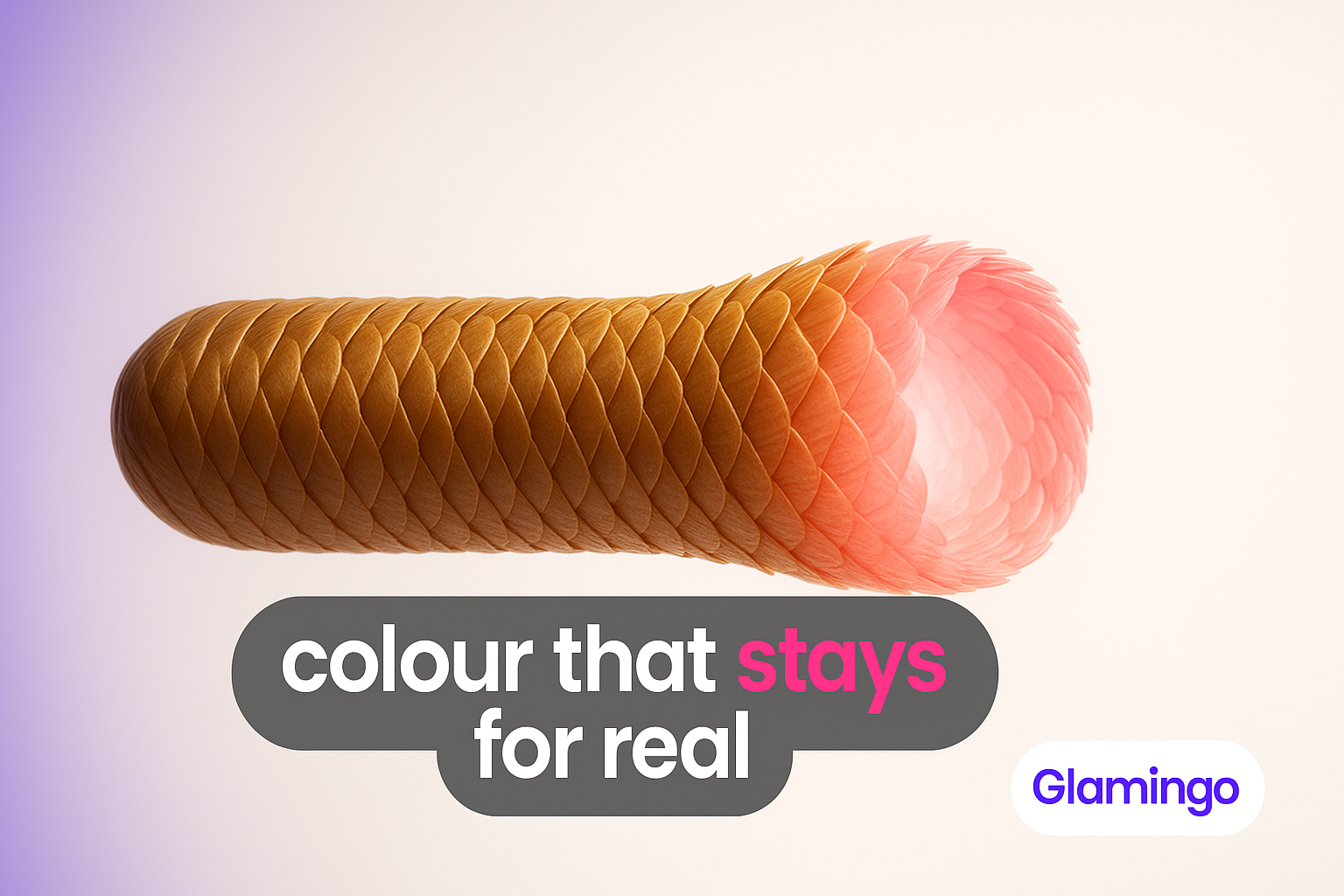
Think of your hair shaft like a tightly woven wicker basket. Colour chemistry works by forcing the weave open with an alkaline solution, slipping new pigment threads in between the fibres, then hoping the weave closes tightly around them again. The longer and more often you force that basket open, the looser the weave becomes — and the faster the new threads slip back out. Every decision in this protocol is about either protecting the weave before you open it, or helping it close as tightly as possible after.
The formulation literature on permanent oxidative dyes confirms that this is precisely the mechanism at work: an alkaline developer raises the pH of the hair shaft, which causes the outer layer (the cuticle — those overlapping scale-like cells that give healthy hair its shine and resistance) to lift. Once lifted, oxidative dye molecules enter the inner core of the strand (the cortex), where they either form new pigment molecules or break down existing ones. The result is a colour change that sits inside the fibre, not on top of it. That’s the trade-off. Permanence requires penetration. Penetration requires structural disruption. Research demonstrates that this penetration produces lasting internal changes to the hair’s biochemical profile — not a surface coating that sits safely on the outside.
The ‘biologically dead but chemically alive’ reality — why your hair keeps reacting after you leave the salon
Here’s what catches most people off guard: the chemical process doesn’t stop when the colourist rinses out the dye. The structural bonds inside the hair shaft — specifically the ionic bonds that hold the fibre’s internal architecture together — take time to re-form after they’ve been disrupted by the alkaline chemistry. This re-formation window is roughly 48 to 72 hours. During this time, your hair is in a genuinely vulnerable state. The cuticle is still partially open, the internal structure is still settling, and anything you do to the fibre in this window has an outsized effect on what the final, settled result looks like. This is not a salon upsell. It’s the reason the first three days after a colour appointment are the most consequential ones for the weeks that follow.
Step 1 — Pre-colour prep (the week before your appointment)
Why a clarifying wash 5–7 days before colour gives you more even results
Product build-up is invisible until it isn’t. If you’ve been using dry shampoo, leave-in conditioners, or styling products regularly, there’s a good chance you have a layer of residue sitting on your hair shaft — and that residue directly interferes with how evenly the dye penetrates. A clarifying shampoo used five to seven days before your appointment strips this build-up and gives the colourist a clean, consistent surface to work with. The reason you do it five to seven days out rather than the night before comes down to allowing your scalp’s natural oils to partially recover — a stripped, irritated scalp on colour day is more reactive, not less.
Clinical guidance on hair maintenance recommends clarifying shampoo every 15 days for managing product build-up without over-stripping — a useful frequency benchmark. For pre-colour prep, a single well-timed use is all you need.
The patch test you are probably skipping — and why PPD allergy risk makes it non-negotiable
This is the part of the protocol most people skip, and it’s the one with genuine clinical stakes. Paraphenylenediamine (PPD) — the primary colouring agent in permanent oxidative hair dyes — is a well-documented allergen, and its concentration in consumer products is largely unregulated. That means the amount of PPD in the box dye or salon colour being applied to your scalp varies by product, and there’s no standardised upper limit protecting you. Allergic reactions to PPD can range from contact dermatitis (localised redness and itching) to severe systemic reactions. A patch test — a small amount of mixed dye applied to the inner arm or behind the ear 48 hours before the appointment — is the only reliable way to screen for this before it becomes a problem.
Occupational allergy research in hairdressers also shows that repeated exposure to PPD and related oxidative dye intermediates creates a cumulative sensitisation risk — meaning you can develop an allergy after years of colouring without a single previous reaction. If you colour frequently, this isn’t a one-time concern. It’s an ongoing one.
What NOT to do in the 48 hours before: oils, heavy masks, and silicone-heavy products that block dye penetration
Hair oils, deep conditioning masks, and products with a high concentration of silicones create a coating on the hair shaft that acts as a physical barrier. That’s exactly what you want for everyday protection — and exactly what you don’t want when you’re about to ask a chemical dye to penetrate through to the cortex. In the 48 hours before your appointment, step back from the heavy stuff. A lightweight conditioner on the ends is fine. A rich overnight oil treatment the night before? That’s working against you.
Step 2 — During the colour process (what to ask your colourist)
Processing time and why ‘leaving it longer for a deeper result’ often backfires
The logic seems intuitive: more time equals more colour. In practice, it doesn’t work that way. Consumer instructions for oxidative hair colour development time vary between 15 and 35 minutes across products — a range wide enough to produce meaningfully different levels of structural damage at the higher end. Pigment uptake reaches its optimum well before the maximum development time. Staying in longer doesn’t intensify the result in a useful way; it extends the period during which your cuticle is chemically lifted and the cortex is exposed. Ask your colourist what the development time is and why — a good colourist will have a specific answer based on your hair’s porosity and condition, not a default setting.
Box dye versus salon dye — what the chemistry difference actually means for your hair’s condition
Box dyes are formulated for one-size-fits-all application, which means the developer strength is calibrated to work on the widest possible range of hair types. In practice, that often means a higher developer concentration than your specific hair actually needs — which drives more structural disruption than necessary. Salon colour is mixed to your hair’s current condition and target result. That’s not marketing language for charging more. It’s a meaningful difference in the degree of cuticle lift your fibre is subjected to. If you’re at a point in your colour journey where you’re weighing cost against condition, this is the trade-off to understand clearly.
What to ask if you colour frequently: how to flag cumulative structural damage before it becomes visible
Research on hair physicochemistry documents that repeated chemical treatment progressively degrades cuticle integrity and cortex composition — and that conditioning interventions can slow this down, but not fully reverse it. The damage accumulates before it becomes visible as breakage or extreme porosity. Ask your colourist to assess your hair’s porosity at the beginning of each appointment. Porosity — how quickly your hair absorbs and loses moisture — is a practical proxy for cumulative structural health. High porosity means the cuticle is chronically open. If your colourist isn’t doing this assessment, ask them to. It should inform the developer strength they choose, the processing time they set, and whether you need a bond-building treatment as part of the service.
Step 3 — The 48–72 hour post-colour window (the phase most people get wrong)
Why you should not wash your hair immediately after colouring — the ionic bond re-formation window explained
Back to the wicker basket. After the weave has been forced open and new threads have been inserted, the fibres need time to settle around those threads and lock them in. Ionic bonds — the salt linkages inside the hair fibre that help maintain its structural architecture — are disrupted during chemical treatment and need roughly 48 to 72 hours to re-form. The mechanistic understanding behind this window is recognised in hair science communities, though large-scale clinical trials specifically measuring colour fade rates relative to first-wash timing are limited. The principle is mechanistically sound: washing introduces water and friction to a fibre that is still in the process of re-setting. That disruption works against pigment anchoring. This is not a myth propagated by salons to make you feel invested in the service. It’s the most logical post-colour decision you can make.
Water temperature, friction, and physical handling during this window
When you do wash — after that 48 to 72 hour window — the temperature of your water matters more than most people realise. Heat causes the cuticle to lift, which is the same direction you’ve just spent the last three days trying to reverse. Cool or lukewarm water keeps the cuticle flatter, which keeps your pigment where you want it. Beyond temperature, physical friction is the other primary mechanical stressor on freshly coloured hair. Aggressive towel-rubbing, sleeping on a rough cotton pillowcase, and the heat from a brush blowout all work against cuticle closure in this early window. The goal is boring and gentle for three days.
What to apply and what to avoid in the first three days
In the first three days, a leave-in conditioner or lightweight hair oil applied to mid-lengths and ends is genuinely useful — it fills some of the gaps in the lifted cuticle surface and reduces friction. What you want to avoid is anything with a low pH, which includes apple cider vinegar rinses and acidic scalp tonics that are popular in hair wellness circles right now. The chemistry logic sounds counterintuitive: acidic products close the cuticle, so shouldn’t they help? The issue is that applying a strong acidic rinse too soon — before the ionic bonds have re-formed — can compress an still-unsettled structure unevenly. Wait until after the 72-hour window before introducing any acid-based products into your routine.
Step 4 — Ongoing maintenance for colour longevity
Colour-safe shampoo is not marketing: the pH and surfactant logic explained
The reason colour-safe shampoos exist isn’t that they contain magical colour-preserving ingredients. It’s that standard shampoos often use high-pH surfactants (the cleansing agents in your shampoo) that swell the hair shaft slightly during washing — which opens the cuticle enough to allow pigment molecules to escape with the rinse water. Colour-safe formulas tend to use lower-pH, gentler surfactant systems that clean effectively without that mechanical cuticle-lifting effect. The result is less pigment loss per wash. Not zero loss — colour fades with every wash regardless — but meaningfully less. This is a functional difference, not a premium product category invented to upsell you.
The clarifying shampoo schedule for coloured hair — every 15 days, and here is why the timing matters
You still need to clarify, even on coloured hair. Product build-up accumulates regardless of your colour status, and a coating of residue on the shaft ultimately affects both colour evenness and the effectiveness of your conditioning treatments. Every 15 days is the clinically referenced benchmark for build-up management — frequent enough to stay ahead of build-up, not so frequent that you’re stripping your colour repeatedly. The timing that matters most is making sure your clarifying day doesn’t fall within the first 72 hours after a colour appointment, and ideally not in the week immediately following. Do it mid-cycle, roughly seven to ten days post-colour, and you get the benefit without the fade cost.
Why red and warm shades need a different maintenance protocol than darker or cool-toned colours
If you’ve ever had red hair and watched it rinse pink within a fortnight, you’ve already lived this chemistry. The structural explanation that surfaces in hair science communities — that red pigment molecules are larger than the molecules used in other shades — is a real chemical phenomenon worth understanding, though the direct link to fade rate in human hair is based on limited rather than conclusive evidence. The practical reality is consistent with the mechanism: red and warm tones fade fastest and require more active maintenance. If you’re maintaining red or copper, that means a colour-depositing conditioner or gloss treatment between appointments, washing less frequently, and being significantly more protective about UV exposure. The same protocols that get you eight weeks out of a dark brown won’t get you four weeks out of a vivid red.
The conditioning ingredients with actual structural evidence — and the ones that are mostly texture and fragrance
The physicochemistry research on hair conditioning draws a fairly clear line between ingredients that measurably improve structural properties and those that deliver sensory benefits — slip, softness, fragrance — without meaningful internal effect. Ingredients with genuine structural evidence include hydrolysed proteins (keratin, wheat, silk), which partially fill gaps in the cuticle surface; fatty alcohols and quaternary ammonium compounds, which reduce static and improve combability with a degree of structural interaction; and certain penetrating oils (coconut oil is the most-studied, with evidence of cortex penetration that reduces protein loss from washing). Ingredients that are primarily texture and fragrance delivery? Most of what makes a conditioner smell luxurious. None of that is a reason to avoid them — it’s a reason not to pay a significant premium for them under the assumption they’re doing structural repair work.
The Singapore-specific variables: humidity, UV Index 10–12, and how they affect colour fade rate
Singapore’s climate isn’t working in your colour’s favour. The year-round humidity sits at around 80%, which means your hair is almost constantly in contact with atmospheric moisture — and moisture swells the hair shaft, which means the cuticle is perpetually being encouraged to lift slightly. That’s a low-level but constant mechanism for pigment loss, independent of anything you’re doing with your washing routine. On top of that, Singapore’s UV Index regularly sits between 10 and 12, which is classified as extreme. UV radiation doesn’t just damage skin — it oxidises hair pigment directly, which is why colour looks dull and washed-out after extended sun exposure rather than simply faded. Red and warm tones are again most vulnerable here, because the oxidation process attacks warm pigments preferentially.
The practical adjustments for local conditions: a UV-protective hair serum or leave-in with UV filters isn’t a luxury for Singapore-based colour clients — it’s a functional product. Wearing a hat during midday sun isn’t just a skin move. And if you’re spending time at the beach or in the water, a silicone-based pre-swim coating acts as a physical barrier between your colour and both UV and chlorine or salt water. These aren’t premium additions to an already long routine. In this climate, they’re the difference between colour that lasts six weeks and colour that lasts three.
When to stop and reassess: signs your hair has reached a cumulative damage threshold that no protocol can paper over
There’s a point at which no amount of good aftercare changes the fundamental problem, and it’s worth being honest about when you’re approaching it. The signs are specific: hair that breaks mid-shaft during normal combing (not just at the ends), elasticity so low that a wet strand snaps immediately when stretched rather than returning to its length, a gummy or mushy texture when wet that suggests the internal protein structure is compromised, or colour that simply won’t hold any shade for more than two weeks regardless of aftercare. These are not signs of a bad colourist or a bad product. They are signs of cumulative structural degradation that has crossed a threshold conditioning cannot recover.
At this point, the protocol changes. Bond-building treatments (look for products with bis-aminopropyl diglycol dimaleate or maleic acid technology) can help stabilise what remains, but the most effective intervention is time — growing out the most damaged sections rather than continuing to subject them to further chemical stress. A good colourist will tell you this honestly. If yours isn’t, ask directly: “Is my hair in a condition where another colour service will make the structural problem significantly worse?” You deserve a real answer to that question.
Before your next colour appointment, book a patch test with your colourist at least 48 hours in advance — not as a formality, but as a genuine PPD allergy screen. If your salon does not offer one as standard practice, ask why, and consider whether that is a salon you want applying unregulated concentrations of a known allergen to your scalp.
If you’re looking for a colourist in Singapore who approaches colour as a technical service — not just a style one — Glamingo lets you browse verified hair colour specialists with real client reviews, so you can find someone who will actually assess your hair’s condition before mixing a single gram of developer. Find a colour specialist near you →
Leave a Reply