
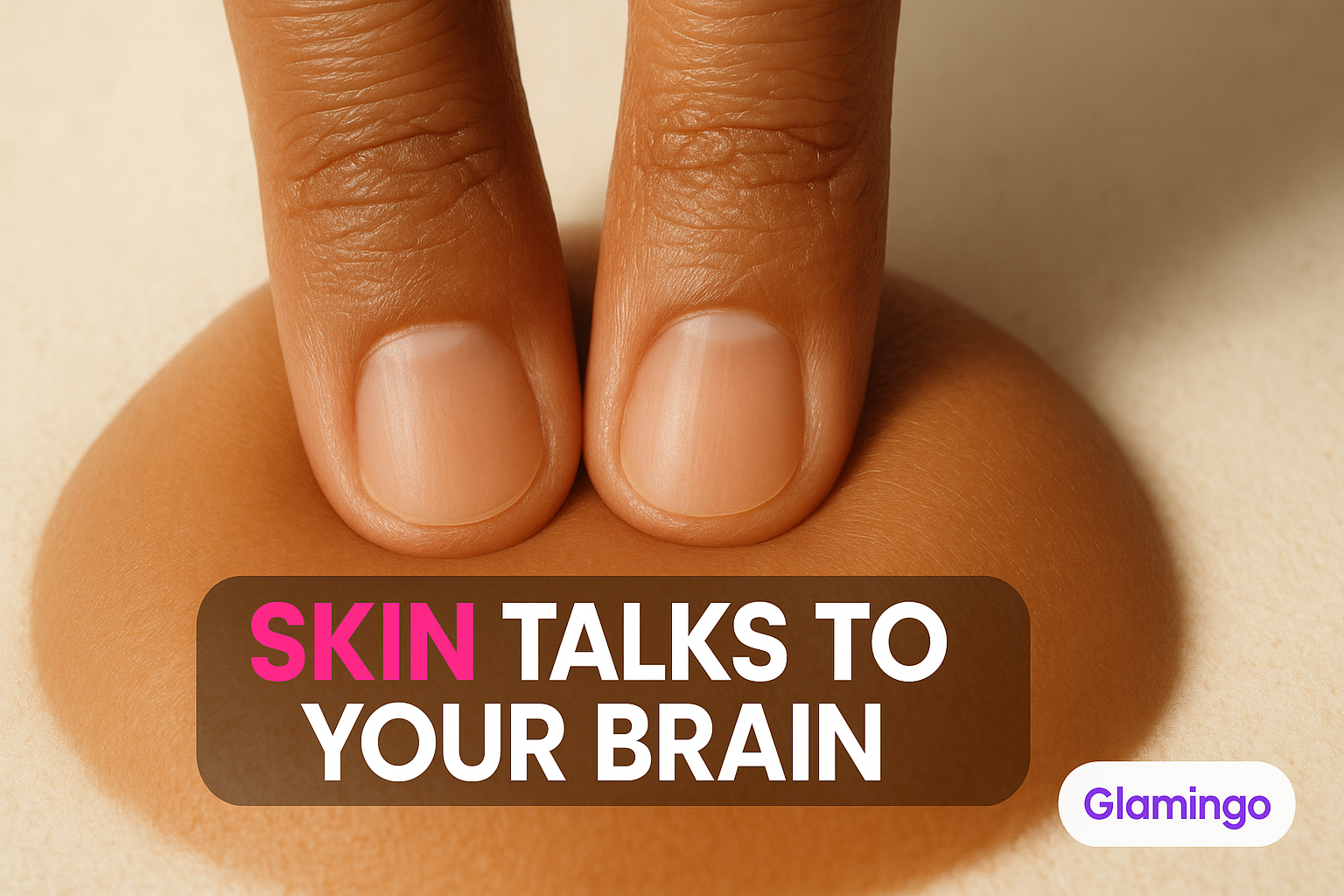
You already know massage feels good. What you probably haven’t been told is why — and why that ‘why’ matters for your skin, your scalp, and your stress hormones. One gua sha convert put it plainly after trying the practice consistently: it didn’t reshape her face, but “there is something else I’ve gotten from the massage” — and that something else turns out to be the more interesting story. The face-lifting claims are largely overstated. The nervous system story is not.
If you’ve been using facial massage as a vague wellness ritual — something that feels nice but you couldn’t quite justify scientifically — this article is for you. Because the actual mechanism is specific, plausible, and relevant to anyone dealing with stress-related skin changes, tension headaches, scalp sensitivity, or the kind of sleep that isn’t quite restful enough. Singapore’s particular combination of relentless heat, workload, and ambient humidity gives all of this extra context. Your skin and scalp are working harder than they would in a cooler climate. What you’re about to read explains why touching them in a particular way does something genuinely different from applying another serum.
The mechanism question: what is your skin and scalp actually sensing when you massage them?
Think of your skin’s pressure-sensing nerve fibres like a direct hotline to your brain’s stress-management department. Most skincare acts on the surface — it treats what’s already happened. Massage is different: it dials into the nervous system in real time, triggering a response that travels inward rather than sitting on top. The skin is not just a barrier you’re maintaining — it’s a sensory organ you can use to communicate with your brain. Understanding that shift in framing is what makes the rest of this make sense.
Mechanoreceptors — the pressure-sensing cells in your skin that start the whole chain
Your skin contains multiple types of specialised pressure-detecting cells (the technical term is mechanoreceptors) sitting at different depths — from just under the surface to deeper in the tissue. When you apply massage — whether that’s a gua sha tool, your fingertips, or a professional’s hands — these cells detect the mechanical force and translate it into electrical signals that travel through the nervous system. This isn’t metaphor. It’s how your body physically converts touch into a biological event.
Different receptors respond to different inputs. Some fire with light surface touch. Others respond to sustained pressure or vibration. What matters for massage is that massage stimulates both surface and deep mechanoreceptors, transmitting signals through the central nervous system and neuroendocrine pathways in ways that contribute to reduced stress-related physiological responses. That sentence contains more than it initially appears to. It’s not just “touch feels nice.” It’s a multi-layered signalling cascade that changes your body’s internal chemistry.
C-tactile afferents — the nerve fibres that carry ‘slow, soft touch’ signals directly to your brain’s emotional centres
Within this sensory system, one class of nerve fibre deserves particular attention. C-tactile afferents — sometimes called CT afferents — are unmyelinated nerve fibres that respond specifically to slow, gentle, stroking touch. Not pressing. Not tapping. Stroking, at roughly the speed of someone moving their hand across your forearm gently. They are found in hairy skin across the body, including the face and scalp.
What makes them remarkable is their destination. Soft stroking massage activates C-tactile afferents, which transmit signals directly to limbic brain areas involved in emotion and stress regulation — a pathway researchers describe as ‘psychoactive’ touch, categorically distinct from other forms of physical contact. The limbic system is the part of your brain that handles emotional memory, fear responses, and the regulation of your autonomic nervous system — the system that controls whether you’re in fight-or-flight or rest-and-digest. C-tactile afferents are, in effect, a back channel into your emotional brain. And slow, skin-level stroking is the key that activates them.
This is why technique is not a minor detail.
From touch to nervous system: how massage speaks to your stress hormones
The neuroendocrine pathway — how mechanoreceptor signals translate into cortisol changes
Once the C-tactile afferents and broader mechanoreceptors fire, the signal travels through the central nervous system and reaches structures that regulate your hormonal stress response — specifically the hypothalamic-pituitary-adrenal axis, which is the chain of command responsible for releasing cortisol. Massage doesn’t block this pathway like a drug would. It nudges it — activating a counter-regulatory response that supports a shift away from the physiological state of chronic stress. The effect sizes vary across different populations and study designs, which is worth being honest about. But the mechanism is credible and the direction of effect is consistent.
For anyone dealing with stress-related skin changes — increased breakouts, redness, sensitivity, or the kind of dull flatness that comes after a run of bad weeks — this pathway matters. Cortisol is a known disruptor of skin barrier function and wound healing. You don’t need a dramatic reduction to see a difference; you need a reliable, repeatable way to move the needle. That’s what regular massage, done with the right technique, can plausibly offer.
Why technique matters: stroking vs. pressing vs. kneading activate different pathways
Here is where a lot of facial massage practice goes slightly wrong. Pressing firmly on a pressure point does something. Kneading deeper tissue does something. But neither of those activate C-tactile afferents the way slow, continuous stroking does. The CT afferent pathway is optimised for a specific input — gentle, moving, skin-level contact at a leisurely pace. Jabbing at your jawline with a jade roller at speed is not the same signal. The instinct to “do more” or press harder, common with massage tools especially, may actually be bypassing the most neurologically interesting pathway entirely.
That doesn’t mean deep pressure has no value — it does, particularly for muscle release and circulation — but if your goal is nervous system regulation and cortisol modulation, the evidence points toward slow and soft, not firm and fast.
The scalp specifically — why the skin on top of your head is neurologically interesting
The scalp’s density of nerve endings and what that means for stress signal transmission
The scalp is one of the most densely innervated areas of the body. It’s also an area that most people ignore in their skincare and massage practice entirely — unless they’ve been for a head massage at a salon, in which case they know exactly how disproportionately good it feels relative to the effort involved. That disproportionate response is the CT afferent and mechanoreceptor density doing its job. The scalp has a fast, efficient line to the brain’s stress centres. Using it deliberately is not indulgence. It is, based on what we currently understand, genuinely efficient neuroscience.
Early research into head meridian acupoint massage — applying pressure at specific scalp points — found a measurable physiological stress response profile distinct from generalised head rubbing, using grey data model analysis to track stress indicators. The study used a non-standard analytical method and is a single data point, so it’s directionally interesting rather than clinically decisive. But it does suggest that where you apply pressure on the scalp matters, not just that you apply it.
What scalp massage does to the cells that support your hair follicles
Below the stress-response story, there’s a second mechanism worth knowing about. Deep in the scalp, in the subcutaneous tissue at the base of each hair follicle, sit cells called dermal papilla cells — the regulatory cells that control follicle activity and, by extension, hair growth and thickness. A standardised scalp massage protocol showed measurable increases in hair strand thickness, with researchers attributing the effect to mechanical stress transmitted to these dermal papilla cells. The study was small and short in duration, so it’s preliminary. But the proposed mechanism — physical force activating follicle-supporting cell behaviour — is consistent with broader research on mechanically activated signalling in scalp tissue.
More recent work has found that regular scalp massage is associated with increased hair thickness and reduced shedding, with mechanically activated signalling pathways in the scalp identified as the likely mechanism. Again, these are limited studies. But if you’re already going to massage your scalp for stress regulation, the potential hair benefit is a reasonable side effect to accept.
The facial angle — muscle tone, lymph, and what the evidence actually shows
What changes in facial muscles with consistent massage practice (and how long it takes)
There’s a piece of common wisdom that facial massage, done before bed, is useful for releasing tension and preventing the kind of overnight jaw clenching that contributes to facial stiffness in the morning. The instinct is right, though the reasoning people usually give is vague. The more specific version: facial muscles, like any muscles, respond to mechanical stimulation over time. An eight-week intensive face yoga protocol in middle-aged women produced measurable changes in facial muscle tone, stiffness, and elasticity — suggesting that consistent mechanical stimulation of facial tissue can genuinely alter muscle properties. Eight weeks. Consistent. Not one good session.
That timeframe is worth sitting with. It reframes what you’re doing when you massage your face. You’re not instantly lifting or toning anything. You’re beginning a process that requires repetition to register at the tissue level. That’s not discouraging — it’s just accurate.
Honest evidence grade: what facial massage can and cannot claim
Lymphatic drainage from facial massage is frequently cited as a benefit, and the mechanism is plausible — gentle, directional strokes toward lymph nodes can support fluid movement in the superficial tissue. But the clinical evidence here is thin. It’s mostly extrapolated from manual lymphatic drainage research in other body areas, not direct facial studies with robust methodology. The puffiness reduction some people notice after morning facial massage is real as an experience; whether it reflects true lymphatic change or simply the fact that you’ve moved fluid mechanically with your hands is harder to separate out.
What facial massage can credibly claim: nervous system effects via CT afferents and mechanoreceptors, potential muscle property changes with consistent long-term practice, and the downstream skin effects of reduced cortisol. What it cannot credibly claim: structural facial reshaping, wrinkle elimination, or dramatic lifting results. The gua sha user who said her face wasn’t lifted but something else was happening? She was, in fact, identifying the real story.
Neuroplasticity and the case for regularity — why one session is not the point
Structured, repeated mechanosensory input vs. occasional treat: what the nervous system research suggests
Here is perhaps the most underappreciated dimension of this topic. Emerging research suggests that massage therapy delivers structured mechanosensory input that may influence neuroplasticity — the nervous system’s capacity to change and adapt over time — as a result of repeated, organised touch. This is early-stage work, and human neuroplasticity studies in this specific context are nascent. But the implication is significant: regular massage may not just relax you in the moment; it may gradually change how your nervous system handles stress inputs by training the stress-regulation pathways to respond more efficiently.
This reframes the practice entirely. An occasional facial massage when you’re already burnt out is a treat. A consistent daily or near-daily practice of deliberate mechanosensory input is potentially a nervous system habit — one that builds capacity over time rather than just offering temporary relief. That distinction is what separates the results people report from regular practice from the mild disappointment of the once-a-week Sunday ritual.
How to use this mechanism: translating the science into a practical approach
Pressure, speed, and direction — what the research suggests matters
Given everything above, a few parameters emerge from the evidence. Speed: slow. CT afferents are optimised for stroking at roughly the pace of a calm, deliberate hand movement — not rushed, not glacially slow. Pressure: light to moderate for the nerve-pathway effect; deeper for muscle release, but that is a separate goal. Direction: for lymphatic benefit, strokes that move toward lymph nodes (down the neck, toward the collarbone from the face) have physiological logic. For CT afferent activation, direction matters less than consistency and contact quality. Tool vs. hands: your fingertips are loaded with sensory nerve endings that provide feedback both to you and, through the pressure they apply, to the skin being touched. Tools can be useful for consistency and temperature, but they don’t replicate the bidirectional sensory exchange of skin-on-skin contact.
The mechanism of acupoint massage is described as physiologically complex, with multiple proposed explanations — the research characterises it as having deep physiological effects that go beyond surface-level relaxation, though the exact pathways remain actively investigated. Which is an honest summary of where the science stands: direction is clear, mechanism is plausible, full picture is still forming.
Singapore context: scalp health in a humid, high-UV climate
In Singapore’s year-round humidity — averaging around 80% — and with UV indices regularly hitting 10 to 12, the scalp faces a specific set of challenges: increased sebum production, a tendency toward product and sweat buildup, and sun exposure to the parting and crown that’s easy to underestimate. This matters for scalp massage because the mechanical and circulatory benefits may be compounded by the physical clearing effect — massage physically dislodges buildup at the scalp surface, improving the environment that hair follicles grow from. It’s not a substitute for a good scalp cleanser, but it’s a meaningful complement. If you’re already dealing with an oily, congested scalp (which, in this climate, many people are), regular massage before shampooing has a practical case beyond the nervous system benefits.
What this means for your routine
The honest summary is this: facial and scalp massage activates real, specific, well-described neurological pathways. The stress-reduction effects are supported by moderate evidence. The scalp and hair benefits are preliminary but mechanistically plausible. The facial muscle changes are promising but require consistency over weeks, not sessions. And the neuroplasticity angle — the idea that regular structured touch builds better stress-regulation capacity over time — is emerging and genuinely interesting, even if it’s not yet proven at scale.
What this is not: a facial lifting treatment, a wrinkle cure, or a replacement for sleep, nutrition, or stress management at the source. What it genuinely is: one of the few practices in a daily beauty routine that works on your nervous system from the outside in — using your skin as a sensory organ rather than just a surface to maintain. That’s a different kind of valuable.
This week, during your evening routine, try two minutes of slow, continuous scalp or facial stroking — not pressing or tapping, but deliberate slow strokes — and notice whether your breathing or jaw tension shifts by the end. You are not testing a skincare product; you are testing whether you can consciously activate the C-tactile nerve pathway. That distinction changes what you are paying attention to.
If you’d rather experience this with a trained professional before building a home practice, Glamingo has facial and scalp massage treatments near you — with verified reviews from women who’ve actually tried them. Browse treatments near you →
Leave a Reply