
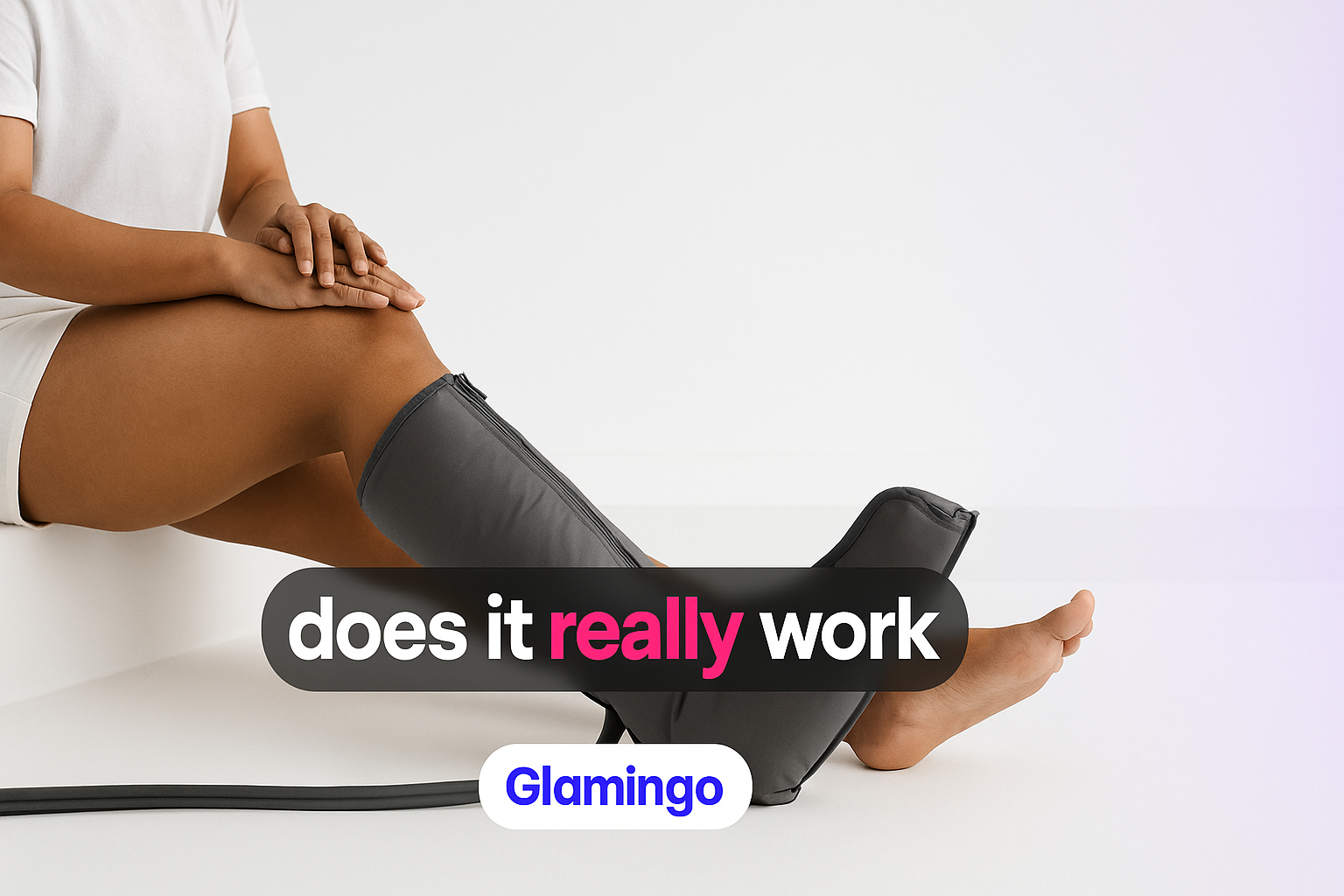
You’ve seen the inflatable boot sleeves at recovery studios and the before-and-after posts promising lighter legs and reduced puffiness. One runner put it plainly: twenty minutes of compression therapy is a must after a long run — legs feel genuinely less heavy. But feeling better after a session and having solid clinical evidence are two very different things. Here’s what the research actually shows, who it genuinely helps, and whether it’s worth spending your money on in Singapore.
If you’ve ever spent a full day on your feet — a long shift, a packed conference, a day of back-to-back meetings followed by an evening in heels — you know that particular end-of-day feeling. Legs that feel thick, heavy, faintly swollen. It’s deeply unglamorous, and the promise of a treatment that specifically addresses it is genuinely appealing. The question is whether compression therapy delivers on that promise in a studio context, or whether what you’re buying is something closer to an expensive, mechanical version of putting your feet up on the sofa.
The Verdict Up Front
Compression therapy is a real, clinically validated treatment — but for a specific set of conditions that most women visiting a Singapore wellness studio do not have. The research supporting it is strong in medical settings: venous leg ulcers, post-surgical recovery, post-thrombotic syndrome (damage to leg veins after a blood clot), and lymphoedema. Outside those conditions, the evidence becomes considerably thinner. Subjective recovery benefits — that lighter-legs feeling — are real for many people, but they are not the same as a measurable clinical outcome.
Worth it for — and not worth it for
It’s worth considering if you have documented circulatory issues, are recovering from a surgical procedure, fly long-haul regularly, or experience genuine heaviness and swelling that your GP has linked to venous function. It is much harder to justify on clinical grounds alone if your goal is cellulite reduction, fat loss, skin tightening, or general “detox” — because the evidence for those outcomes in healthy individuals simply isn’t there. And if you have persistent leg swelling, visible varicose veins, or heaviness that does not resolve after rest, the right first stop is a doctor, not a studio.
What Compression Therapy Actually Does to Your Body
The mechanism: pushing fluid back where it belongs
Think of your lower leg veins like a garden hose held horizontally — blood and fluid can pool and stagnate without enough pressure to push it uphill back to the heart. Compression therapy is essentially a firm, rhythmic squeeze working up the leg, like someone running their hands from your ankle to your knee to move that fluid along. The squeeze works — but only if there’s actually a pooling problem to solve. If the hose is working fine, squeezing it harder doesn’t make things meaningfully better.
In clinical terms, this is called supporting venous return — the process by which deoxygenated blood travels back from your extremities toward your heart. For people with chronic venous insufficiency (when the valves in your leg veins no longer pump blood upward efficiently), this mechanism is genuinely impactful. Research on lower extremity chronic venous disease confirms this is a real and documented physiological effect — though the same review acknowledges that variability in results makes firm conclusions uncertain even within clinical populations.
Why pressure level (mmHg) changes everything
Compression is measured in millimetres of mercury, or mmHg — the same unit used to measure blood pressure. It is not a minor technical detail. A randomised controlled trial of women undergoing vein surgery found that low-pressure compression (18–21 mmHg) and moderate-pressure compression (23–32 mmHg) produced meaningfully different outcomes — confirming that the amount of pressure applied is a clinically significant variable. This matters enormously when you consider that most wellness studios either do not disclose the pressure their devices deliver, or cannot tell you if you ask.
What the Clinical Evidence Actually Shows
Where the evidence is strong: venous conditions, lymphoedema, post-surgical recovery
Let’s be clear about where the evidence is genuinely solid. For post-thrombotic syndrome — where leg veins are damaged following a blood clot — compression therapy has documented effectiveness at Stage I and II severity according to Widmer classification. It is the established standard of care for venous leg ulcers, where it has been shown to enhance healing rates. And a long-term randomised controlled trial comparing compression alone versus compression combined with surgery for chronic venous ulcers confirmed that compression is a genuine treatment tool — though combination therapy produced better long-term outcomes, which tells you it works well but isn’t a magic standalone fix even in clinical settings.
Lymphoedema — the accumulation of lymph fluid that causes persistent swelling, often in the arms or legs following cancer treatment — is another area where compression has real clinical standing. It is considered a cornerstone treatment for breast cancer-related lymphoedema, though that same research notes that response varies considerably across patients and the predictors of who will respond well are not yet well established. Effective in the right context. Not a guaranteed outcome for everyone.
Where the evidence gets thin: healthy users, aesthetic claims, general ‘wellness’
Here is where the honest conversation gets uncomfortable for the studio industry. The market for compression therapy has expanded dramatically — the global market was valued at approximately USD 4.79 billion in 2025 and is projected to nearly double to USD 9.91 billion by 2035 — and with that commercial expansion has come a significant widening of the claims being made. Cellulite reduction. Skin tightening. Lymphatic drainage for general wellness. Body contouring.
The mechanism story for these claims sounds plausible on the surface — move fluid, move toxins, stimulate circulation, tighten tissue. But the clinical research underpinning compression therapy was conducted in patients with specific medical conditions, not healthy women in their thirties trying to reduce the appearance of their thighs. The mechanism makes sense on paper for people with an actual circulatory deficit. Whether it translates to visible aesthetic results in someone without one is a genuinely different question — and independent research hasn’t caught up with the marketing.
Even in medical settings, individual response varies considerably
It is also worth noting that compression therapy is not a guaranteed win even when the clinical rationale is clear. Research on post-thrombotic syndrome found that tailoring the duration of compression therapy based on clinical signs produced different outcomes compared to a fixed-duration approach — meaning how long and how consistently it is applied influences results. A single 20-minute studio session looks very different from the calibrated, sustained compression used in these trials. Response varies. Duration matters. Pressure matters. These are not minor variables.
The Studio Version vs. the Clinical Version — Are They the Same Thing?
How commercial compression devices differ from medical-grade protocols
The short answer: they use similar-looking equipment, but the protocols are quite different. Clinical compression therapy involves a medical assessment, a prescribed pressure level appropriate to your condition, a structured duration and frequency of sessions, and ongoing monitoring of your response. The studio version typically involves lying on a table for 20 to 40 minutes in inflatable sleeves set to a standardised pressure, with no individualisation based on your circulatory health. Both involve pneumatic compression — air-inflated sleeves that squeeze sequentially up the leg. But one is calibrated to your specific physiology; the other is a one-size experience.
This is not to say studio sessions are useless. The mechanism is real, the sensation is genuinely relaxing, and if you have mild circulatory sluggishness from our heat and humidity — Singapore’s year-round warmth is not kind to leg circulation — you may well walk out feeling noticeably better. That is a real benefit. It just needs to be priced and framed accordingly, not packaged as equivalent to a clinical intervention.
What questions to ask before booking a session
Before you commit to a package, it’s reasonable to ask: what pressure does the device deliver in mmHg? Does the studio adjust pressure based on your health history? Do they take a basic intake about circulatory conditions or medications? If the answers are vague or the staff look blankly at you when you mention mmHg, you have your answer about the clinical depth of what’s on offer.
Who Should Seriously Consider It, Who Can Skip It, and Who Needs a Doctor First
Strong candidates: post-exercise recovery with genuine circulatory symptoms, frequent long-haul travellers, post-procedure swelling
If you run regularly and your legs genuinely ache and feel heavy for days after long distances, there is reasonable logic to trying compression — the mechanism applies, even if robust evidence in healthy athletic populations specifically is limited. Frequent long-haul flyers have a legitimate circulatory rationale too: sitting immobile for hours in a pressurised cabin reduces venous return, and compression can help counteract that. If you’ve recently had a body treatment — post-liposuction or post-surgical swelling — and your doctor has recommended it, that is a clear use case with clinical backing. These are the scenarios where your money is proportionate to what the evidence supports.
Skip it (for now): if your primary goal is fat reduction, skin tightening, or cellulite
If someone is selling you compression therapy as a solution for stubborn fat, skin laxity, or cellulite, the honest answer is that the independent clinical evidence for those outcomes in healthy individuals is thin. The ingredient story — move fluid, stimulate circulation, tighten tissue — is compelling in the way that many beauty ingredient stories are compelling. But compelling mechanism does not equal proven result. You’d be better served directing that budget toward treatments with stronger evidence for those specific goals.
See a doctor first: persistent leg swelling, heaviness that doesn’t resolve, visible veins
If your legs swell regularly, the swelling doesn’t resolve after a night’s rest, you have visible varicose veins, or the heaviness feels like a chronic issue rather than occasional tiredness — please do not book a studio compression session as your first response. These can be signs of venous insufficiency or other circulatory conditions that need a medical assessment. Compression can be genuinely therapeutic in those cases, but the pressure, duration, and protocol need to be prescribed, not selected from a menu.
Cost vs. Evidence: Is It Worth the Price in Singapore?
What a course of sessions typically costs vs. what clinical protocols actually require
In Singapore, a single compression therapy session at a wellness studio typically runs between $60 and $150 depending on the provider and add-ons. Packages are usually positioned as a course — five to ten sessions — making the total investment substantial. Clinical protocols, by contrast, involve sustained daily or near-daily compression over weeks, at calibrated pressures, with outcome monitoring. A handful of 30-minute studio sessions a month is not equivalent to that. Whether the subjective benefit — lighter legs, relaxation, a sense of doing something good for your circulation — is worth that price point is ultimately a personal calculation. Just make it with accurate information.
The honest evidence grade summary
Strong evidence exists for compression therapy in venous ulcers, post-thrombotic syndrome, lymphoedema, and post-surgical recovery. Moderate evidence supports the importance of pressure calibration and treatment duration as variables that affect outcomes. Evidence is limited for healthy individuals using it for recovery or wellness. Evidence for aesthetic claims — fat reduction, cellulite, skin tightening — is weak and largely unsupported by independent research. The gap between that evidence profile and the way compression therapy is currently marketed in wellness spaces is considerable, and it is worth factoring into your decision.
The Single Action
Before booking a compression therapy package, ask the studio one specific question: what pressure in mmHg does their device deliver, and do they adjust it based on your individual circulatory health? If they cannot answer — or if the response is a vague “it varies” — that tells you the session is likely closer to a relaxing massage than a clinical protocol. Use that information to decide whether the price is proportionate to what you are actually getting.
If you’ve decided compression therapy is worth exploring — particularly for post-exercise recovery or post-procedure swelling — Glamingo lists compression therapy providers in Singapore with verified reviews so you can compare what each studio actually offers before you commit. Browse compression therapy near you →
Leave a Reply