
You’ve seen the before-and-afters, you’ve been quoted a price, and you’re still not entirely sure what IPL is actually doing to your skin when that flash goes off. Before you book — or before you book again — it’s worth understanding the mechanism, because it changes how you assess results, manage expectations, and protect your investment in the weeks after treatment.
For a lot of women in Singapore, IPL enters the picture after years of trying brightening serums, prescription creams, and the occasional facial that promises to “reduce pigmentation” without ever quite delivering. You’ve done the work topically. The sun spots from your twenties are still there. And now you’re weighing up whether a machine that flashes light at your face will actually finish the job. That scepticism is reasonable — and understanding exactly what’s happening beneath the skin surface is the best way to decide whether IPL is the right answer for your specific situation.
What IPL actually is — and why it is not the same as a laser
Broad-spectrum light vs. single-wavelength laser: the practical difference
The most common misconception about IPL is that it’s just a gentler version of laser treatment. It isn’t. IPL and laser are fundamentally different technologies, and the distinction matters more than most clinics explain during a consultation. A laser emits a single, precise wavelength of light — every photon travels at the same frequency, targeting one specific structure in the skin with high precision. IPL does something different: it emits a broad spectrum of multiple wavelengths simultaneously, more like a camera flash than a focused beam.
This is both IPL’s versatility and its limitation. The broad spectrum means it can target several skin concerns in a single pass — pigmentation, redness, and visible blood vessels all at once. But that same breadth means it’s less surgically precise than a laser. When you need to hit one specific target very accurately — particularly deeper in the skin — a single-wavelength device has the advantage. Understanding this from the start helps you evaluate what IPL is genuinely good at, and where you might need a different tool entirely.
What ‘intense pulsed light’ means in plain terms
IPL is a non-ablative light-based technology — which means it works without removing or breaking the skin surface. The “intense” refers to the energy level of the light pulses, not to any abrasion or heat you’d feel the way you would with resurfacing treatments. Filters are applied to the device to block certain wavelengths and direct energy toward the specific chromophore — the concentrated area of pigment or colour — being targeted. That filtering is what allows the therapist to customise the treatment somewhat, though it still operates across a range rather than a single precise point.
The mechanism: how light becomes pigment removal
Chromophores — why darker pigment absorbs more energy
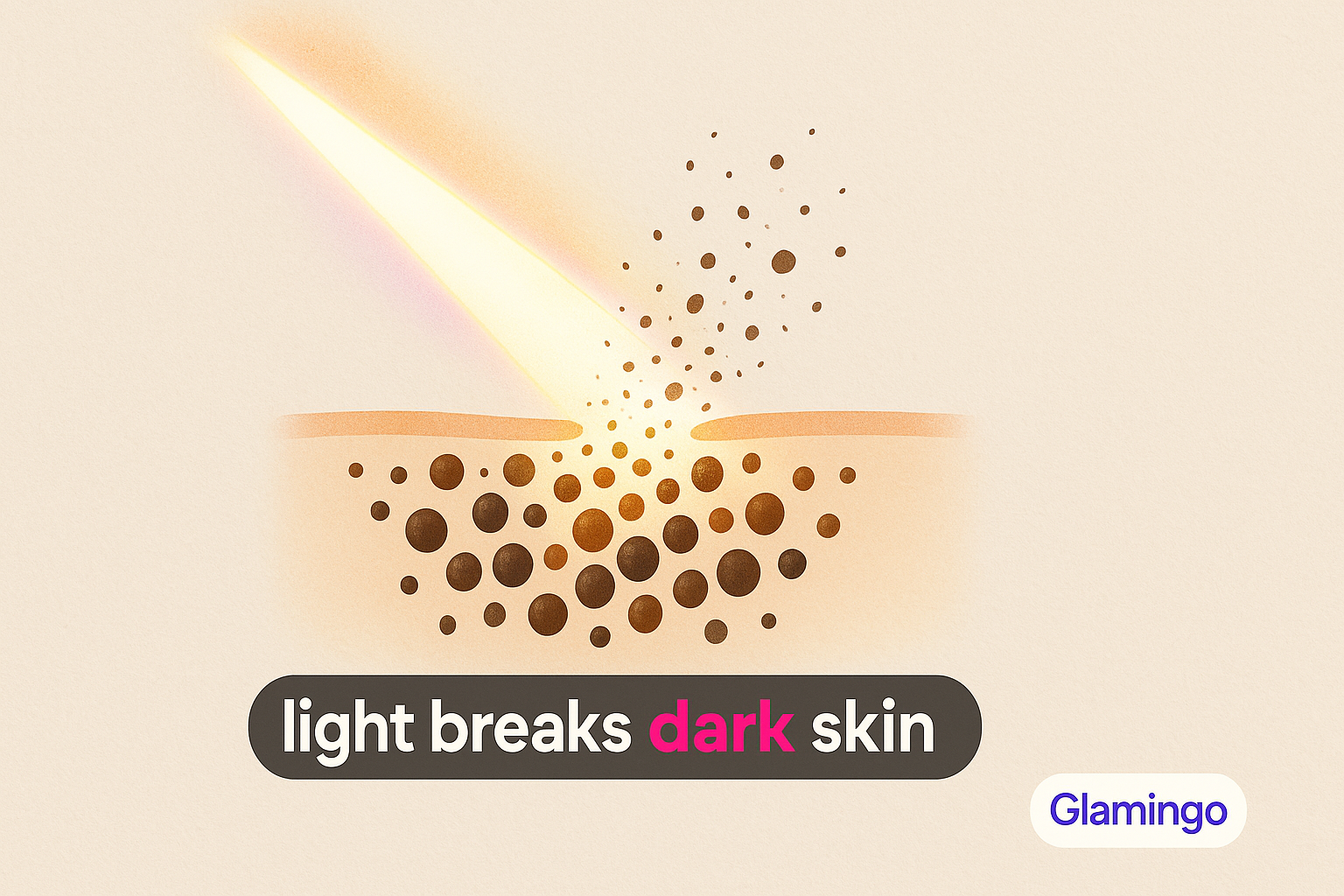
Think of your pigmented skin cells as dark-coloured objects left in sunlight — they absorb heat faster than pale objects around them. IPL works on exactly the same principle. The flash of broad-spectrum light passes over your skin, and the darker melanin-concentrated cells absorb the energy disproportionately, heating up while the surrounding lighter skin absorbs far less. This is the principle of selective photothermolysis — the selective destruction of a specific target using light-generated heat — and it’s the foundation of how both IPL and laser treatments work on pigmentation.
IPL delivers controlled light energy that is absorbed by chromophores — areas of concentrated pigment — creating a thermal injury that breaks up deposited melanin. The key word here is “selective.” The technology is designed to deposit energy into the darker target while sparing the tissue immediately around it. How well that selectivity works in practice depends on how much contrast exists between the pigmented area and the surrounding skin — which is one reason IPL results vary significantly by skin tone and pigmentation type.
Heat, fragmentation, and the skin’s clearance process
Once the melanin absorbs enough energy, it heats rapidly and fragments — essentially breaking into smaller particles. Your body then clears those fragmented pigment particles the way it would clear any cellular debris: gradually, over days to weeks, pushing it upward and out through the skin’s natural renewal process (what dermatologists call desquamation, the skin’s regular shedding cycle). This is not an instant result. The light flash triggers a biological process that plays out over time, which is why assessing IPL results the morning after a session tells you almost nothing useful.
Why treated spots darken before they fade — what is actually happening
When melanin absorbs IPL energy, it heats and fragments — and these pigment fragments may temporarily darken before being gradually brought to the surface and shed. If you’ve had IPL and woken up the next day to find your sun spots looking darker and more distinct than before treatment, that’s not a bad sign. It’s actually the treatment working as intended. The fragmented melanin oxidises briefly as it moves upward through the skin layers, creating what’s often described as a “coffee ground” or fine pepper-like appearance on the skin surface. Within about a week to ten days, those darkened specks shed away. First-timers who aren’t warned about this sometimes panic and assume the treatment has made things worse — it hasn’t. Abandoning aftercare at this stage, or exfoliating aggressively to speed things up, is one of the most common ways people undermine their own results.
What IPL can and cannot treat
Where IPL performs well — sun spots, freckles, solar lentigines
Solar lentigines (the flat, defined sun spots that appear after years of UV exposure) and freckles are where IPL performs most reliably — because they sit near the surface of the skin and contain a high concentration of melanin that contrasts well against surrounding tissue. The technology is well-matched to this kind of pigmentation: it’s superficial, UV-driven, and melanin-dense. For women in Singapore who’ve accumulated a decade or more of equatorial sun exposure, this category of pigmentation is extremely common. IPL produces a pronounced reduction of superficial melanin because its wavelengths are strongly absorbed by pigment near the skin surface — and the clinical outcomes for this specific type tend to be the most consistent.
Where IPL has real limitations — melasma, deeper dermal pigmentation, darker skin tones
Here’s where the conversation gets more honest, and where some clinics don’t go far enough during consultations. Melasma — the hormonally-influenced, often symmetrical pigmentation that appears across the cheeks, upper lip, and forehead — is a genuinely different beast. It sits deeper in the skin, is driven by hormonal triggers rather than purely UV damage, and responds unpredictably to heat-based treatments. There’s a real clinical risk that IPL can worsen melasma by triggering further melanin production in response to the heat, rather than clearing it. This isn’t a fringe outcome — it’s a recognised pattern that anyone who reads through enough real patient experiences will have encountered. Clinics that assess you thoroughly before recommending IPL will specifically screen for this. Those that don’t are worth questioning.
Skin tone is also a meaningful variable. The selectivity of IPL depends on contrast between the pigmented target and surrounding skin. On deeper skin tones (Fitzpatrick IV–VI), that contrast is reduced, which means surrounding skin absorbs more energy than intended — raising the risk of burns, post-inflammatory hyperpigmentation, or uneven results. This doesn’t mean IPL is off the table for deeper Asian skin tones, but it does mean the settings, filters, and experience of the operator matter significantly more. A clinic with demonstrated experience treating Southeast Asian skin types is not a nice-to-have — it’s essential.
The redness and vascular benefit — why IPL treats more than pigmentation alone
One genuinely useful aspect of IPL’s broad-spectrum nature is that it targets more than one chromophore in a single session. Beyond melanin, IPL also targets oxyhaemoglobin — the molecule that gives blood its red colour — which means it can reduce visible redness, facial flushing, and superficial broken capillaries in the same treatment pass. IPL may help improve pigmentation, sun spots, redness, visible blood vessels, uneven skin tone, and some signs of photoageing in a single treatment course. For women dealing with both pigmentation and persistent facial redness or rosacea-adjacent concerns, this dual action is a legitimate advantage over a more targeted single-wavelength device.
What to expect across a course of treatment
Why one session is rarely enough — the biology of pigment clearance
A single IPL session will not clear your pigmentation. This isn’t a soft sell for more bookings — it’s how the biology works. Each session fragments a portion of the melanin present at that time. Your skin needs time to clear those fragments, and some pigment sits at depths or in concentrations that require cumulative treatment to reach effectively. Most protocols recommend three to six sessions spaced four to six weeks apart, which allows the skin’s clearance process to complete between treatments and gives you an accurate read on how your skin is responding. Expecting dramatic results after one session sets you up for disappointment and early abandonment of a process that actually does work — just not immediately.
The evidence base for long-term IPL: what the research shows and at what grade
Peer-reviewed research supports that long-term, regular IPL therapy effectively improves facial pigmentation, erythema, and wrinkles, positioning it as a comprehensive photorejuvenation treatment rather than a one-and-done fix. That’s encouraging — but worth contextualising. The evidence grade here is moderate: peer-reviewed support exists, but study sample sizes vary and some research in this space has industry involvement. The mechanism is well understood. The consistent clinical experience of practitioners treating the right skin type with the right settings over a proper course is also meaningful. What the evidence doesn’t support is expecting permanent results from a single session, or assuming results will be maintained without some ongoing maintenance treatment over time.
Aftercare that protects your result
Why SPF after IPL is not optional in Singapore’s UV conditions
Singapore’s UV Index sits between 10 and 12 on most days — that’s in the “extreme” range, and it’s year-round. After IPL, your skin has just had its melanin deliberately fragmented and is in the process of clearing and renewing. Sun exposure during this window doesn’t just risk reversing your results — it actively recruits more melanin production in response to the UV stress, potentially making your pigmentation worse than before you started. SPF 50 applied every morning, and reapplied if you’re outdoors, is not an abundance of caution after IPL. It’s the single most important thing you can do to protect what you’ve paid for. If you’re not already wearing broad-spectrum SPF daily in Singapore, IPL is a very good reason to start.
What to avoid in the weeks around treatment
In the days immediately after treatment, your skin is inflamed at a cellular level even if it doesn’t feel dramatic from the outside. Heat is the main thing to avoid — saunas, hot showers, and vigorous exercise that significantly raises your body temperature can extend redness and prolong recovery. Active exfoliants (acids and retinoids) should be paused for at least a week post-treatment to avoid disrupting the skin’s clearance process and compromising your barrier while it’s more vulnerable. Similarly, in the weeks before treatment, certain ingredients and medications that increase photosensitivity — including some vitamin A derivatives and certain antibiotics — should be discussed with your clinic. A thorough pre-treatment review of your current routine is something a good clinic will ask about; if yours doesn’t, raise it yourself.
Is IPL right for your pigmentation type? One question to ask before you book
The most important variable in IPL outcomes isn’t the machine, the brand of device, or even the number of sessions. It’s whether the type of pigmentation you have is actually suited to what IPL does. Sun-induced, superficial pigmentation with clear melanin concentration near the skin surface — that’s IPL’s territory. Hormonally-driven, diffuse, or deep pigmentation is a different conversation that requires a different assessment and possibly a different tool entirely.
For women in Singapore, this distinction is particularly relevant. Melasma is significantly more prevalent among Asian women, particularly those with Fitzpatrick III–V skin tones, and it frequently coexists with UV-driven pigmentation. The two can look similar to the untrained eye — and sometimes to a hurried clinic consultation. The treatment approach for each is meaningfully different, and using the wrong one doesn’t just waste money. It can make things worse.
Before booking, ask the clinic one specific question: is my pigmentation superficial and UV-driven, or could it be melasma? The answer changes whether IPL is the right tool entirely — and a clinic that answers this question thoroughly is one worth trusting with your skin.
If you’re ready to find a clinic that will actually assess your pigmentation type before recommending a course of treatment, Glamingo lists IPL providers across Singapore with verified reviews from real patients — so you can compare experiences before you commit. Search IPL treatments near you →
Leave a Reply